Immaculata News
Immaculata University Celebrates Emergency Management Professionals
This August, Immaculata University joins the International Association of Emergency Managers in launching the first-ever National Emergency Management Awareness Month, highlighting the vital roles that professionals in the field, including many faculty, students and alumni of Immaculata University’s Emergency Planning and Management programs, play in supporting community preparedness and resilience.
George M. Schwartz, Ed.D., associate professor and director for Immaculata’s Emergency Management programs, stated, “It is gratifying that there is an effort to raise awareness for the importance of emergency management and recognize the contributions of EM professionals. I am immensely proud of our graduates who are serving their communities in vital emergency management roles.”
In 2012, the University launched its bachelor’s in emergency management program, which currently has approximately 25 students enrolled. Program graduates have gone on to become leaders in the field, including two recent alumni.
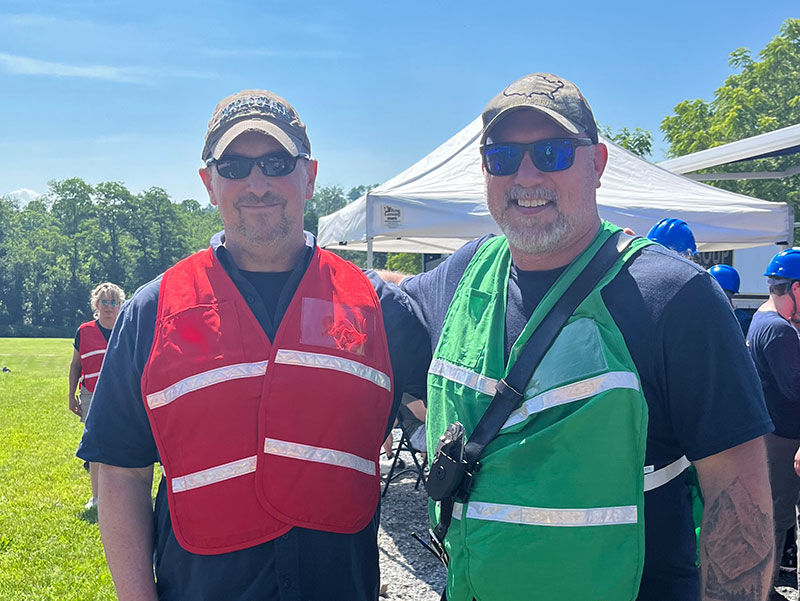
Jason Motter ’25 had nearly 30 years of experience in emergency services when he enrolled in Immaculata’s Bachelor of Science in Emergency Planning and Management. At the time, he was serving as a paramedic/firefighter before taking a part-time position at Tower Health’s Phoenixville Hospital, supporting the hospital’s Emergency Operations Center. That role evolved into a full-time position as manager of emergency preparedness in 2022.
Immaculata’s program stood out to Motter for its practical curriculum, leadership development, experienced faculty and flexibility for working professionals. He credits the online format, which often included live discussions with classmates, for challenging him to manage his time while coordinating and collaborating with people from diverse backgrounds and schedules. Motter excelled in his classes and was inducted into the Order of the Sword and Shield, an academic and professional honor society dedicated to all protective security disciplines.
“The education I received directly enhances my ability to lead multi-agency mass casualty incident exercises and strengthen regional preparedness across healthcare, all disciplines of emergency services and emergency management,” Motter stated.
When Steven Schultz ’21earned his associate degree in emergency management and planning from Delaware County Community College, he was working in emergency medical services (EMS) and wanted to further his education in the field. His instructor suggested that he check out Immaculata’s well-respected online program—which turned out to be exactly what he was looking for. After graduating in 2021, Schultz applied what he learned in class to his new role as operations coordinator for the New Castle County, Delaware, office of Lewis Environmental. From there, he moved on to the Delaware County Department of Emergency Services, where he was recently promoted to chemical safety program coordinator.
Beyond the emergency management courses, Schultz acknowledges that his degree gives him the ability and confidence to conduct thorough research and to develop an extensive professional network. He is currently enrolled in Immaculata’s partnership program with Thomas Jefferson University’s Emergency and Disaster Management master’s program.
Both Motter and Schultz note that one of the program’s strengths is its experienced faculty. Adjunct professor David Boucher, Ph.D., brings firsthand knowledge, including his service with the Pennsylvania National Guard in the aftermath of Hurricane Katrina in New Orleans. He now serves as the training and exercise division supervisor at the Pennsylvania Emergency Management Agency (PEMA) and teaches Risk Analysis and Threat Assessment at Immaculata.
“Academic programs like Immaculata’s Emergency Planning and Management degree make the field stronger by teaching policy, best practices and professional standards to the next generation of emergency managers,” Boucher said.
These professionals are prime examples of the dedicated workforce in the field of emergency management and they provide a reason why the Emergency Management Awareness Month was established.
The International Association of Emergency Managers’ National Emergency Management Awareness Month summed up the professionals in the field by stating:
“We always know who to call, we anticipate the needs, and we are never surprised by the phrase ‘this is unprecedented.’ We are ready.”
Photo: George Schwartz, Ed.D., director of IU’s emergency management programs with alumnus Jason Motter at a field exercise.