Immaculata News
From Norway to Immaculata, David Martinson Is Preparing the Next Generation of Counselors
Tags: counseling psychology
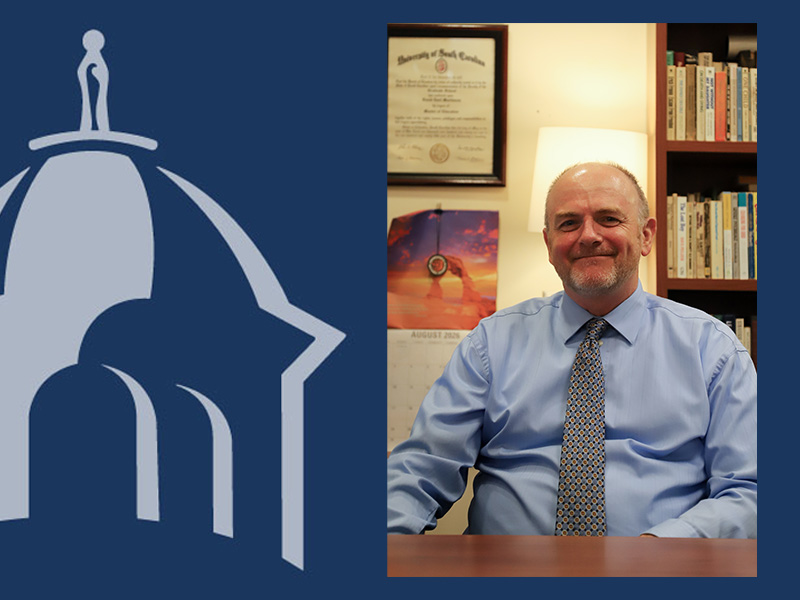
As a child growing up in Brumunddal, Norway, David Martinson, professor of counseling and chair of Immaculata University’s Psychology and Counseling Department, learned the value of hard work and perseverance early.
He remembers walking two hours each way to school—often through snow and blizzard conditions. But the hardest part of the journey wasn’t the weather. It was what awaited him at school: a bully.
“I remember being tormented by this bully in the school system,” Martinson said.
Years later, his education and career in counseling brought him back to that same school in an unexpected full-circle moment.
While completing his Ph.D. in Counselor Education and Supervision, Martinson spent three years in Norway as part of his field experience. He was placed at his former school, where he counseled both students who bullied others and those who were bullied.
“Sitting in a room with a bully, in a position of power, I had so much empathy and compassion for this guy who was just tormenting these other kids because I understood that he was a victim himself,” Martinson said.
The experience helped shape the counselor he would become. Having been bullied as a child, Martinson understood the impact a counselor, teacher or other trusted adult can have on a young person’s life. It can make a big difference, he said.
Finding His Calling
When Martinson was 13, his family moved to the United States and settled in South Carolina, where he finished high school in Greenville.
A few years later, his mother suggested that he consider becoming a counselor because he was such a good listener. Counseling had not been on his radar, but her suggestion planted a seed. Martinson believes his upbringing in Norway helped develop the listening skills that are essential to the counseling field.
“People in Norway take their time when they talk to people. They’re not always in a rush,” he said.
After moving to the United States, he noticed a stark contrast.
“I remember coming to the U.S. and noticing that everyone seemed to be in a rush—everyone was driving fast—always going somewhere,” he said. “In Norway, things slow down so you can take your time, have a cup of tea and catch up. I still have that philosophy.”
With his mother’s encouragement, Martinson pursued counseling as a career at the University of South Carolina, earning both his master’s degree and Ph.D.
However, paying for college took diligence and perseverance. He held a variety of jobs, including bicycle mechanic, pizza delivery driver and fish cannery worker in Alaska—experiences that reinforced the work ethic he developed growing up in Norway.
Finding a Home at Immaculata
After completing his doctorate, Martinson began applying for teaching positions. He eventually found an opportunity in Pennsylvania, where he joined Immaculata University in 2012 as an assistant professor in the graduate psychology and counseling department, and moved and settled with his wife and family to southeastern Pennsylvania.
He was drawn to Immaculata’s emphasis on preparing students with both the academic knowledge and practical skills needed to become effective counselors.
When he first arrived at Immaculata, Martinson served as the field site coordinator, helping secure practicum and internship placements for the counseling graduate students. He quickly discovered that Immaculata had earned a strong reputation in the community.
“People were telling me how great Immaculata was,” he said. “They would ask me, ‘where are you from, Immaculata?’ I was proud to be part of the program—’Yeah, I’m from Immaculata!’”
Building the Next Generation of Counselors
As chair of the Psychology and Counseling Department, Martinson has helped oversee strong enrollment in the undergraduate and graduate programs. In 2025, he supported Ryan Bowers, Ph.D., in the launch of Immaculata’s first Ph.D. degree with the Counselor Education and Supervision program, which prepares professionals for counselor education, clinical supervision, research and leadership. The program now has 23 students across its first two cohorts.
Alongside decades-long accreditation for the graduate psychology degrees from the American Psychological Association, Martinson and his staff earned accreditation from the Council for Accreditation of Counseling & Related Educational Programs (CACREP) for its M.A. in Clinical Mental Health Counseling and will be seeking CACREP Accreditation for the Ph.D. in Counselor Education and Supervision program once the first cohort graduates. Martinson describes CACREP as the gold standard for counseling-related programs.
By providing students with an excellent education in psychology and counseling, Immaculata is preparing future professionals in the field—helping them become the people others can rely on when they are struggling.
In many ways, he sees his own journey reflected in his students. Many, he says, have experienced difficult circumstances themselves and want to use those experiences to help others.
It is one reason he believes counseling is such a meaningful and growing profession.
“You’re gonna have a job,” Martinson insists. “We need new counselors.”
A Career of Paying It Forward
As Martinson enters his final year as chair of the Psychology and Counseling Department, he is excited to continue teaching graduate students. Throughout his career, he has remained grateful to the people who believed in him, encouraged him and invested in his future, reaping the benefits of the wisdom of mentors like Dr. John McFadden at the University of South Carolina and Sister Jeannine O’Kane, IHM at Immaculata University.
From the mountains and farms of Norway to the classrooms and counseling programs of Immaculata, Martinson has carried one lesson with him: slow down, listen and make time for people.
For him, Ha en fin dag—“Have a nice day”—isn’t simply a phrase from home. It’s a simple philosophy.