2026 Abstracts
April 20, 2026
11 a.m. - 1 p.m.
Villa Maria Hall
Immaculata University is pleased to present undergraduate research with our Posters Under the Dome symposium. Our students, from many academic departments, have worked collaboratively with faculty members to conduct research, analyze data, prepare posters and prepare presentations for review. These student researchers are ready to engage in a question-and-answer portion of their work after presenting their research.
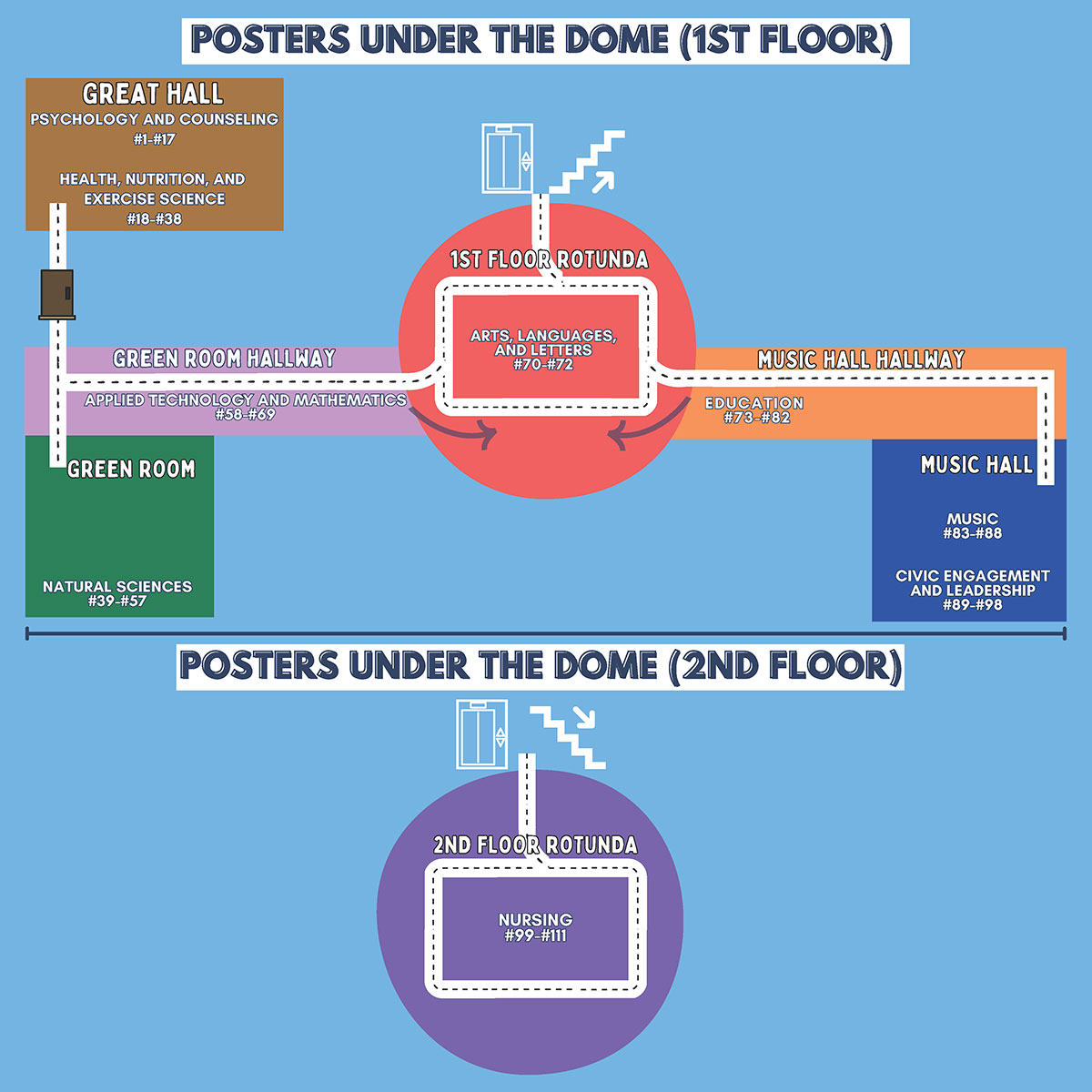
Abstracts
Title: Body Horror Serving the Mind: How Artistic Discomfort and Harm can Heal
Student Researcher(s): Nastasja Stahl
Faculty Mentor(s): Cara Knaster
Department: Psychology and Counseling
Poster #: 1
Every human exists in a body, but no one experiences their body in the same way. Current therapeutic practices can enhance an individual's mind-body connection, but its focus on ‘healthy’ appearances may risk disregarding valid but morbid expressions of the human form. Body horror (BH) is the artistic defilement of the human body through physical, psychological, or other disturbing means. The healing potential of BH should be considered as a possible way to help those with marginalized bodies, such as those with body dysmorphia, chronic pain conditions, or survivors of physical assault. This study is a literature review of BH’s positive mental health effects. First, worldwide BH folktales, mythos, and contemporary media are analyzed as positive societal outlets using narrative theories of carnivalesque and abjectifcation. This compilation additionally highlights BH’s application in teaching culturally appropriate behavior, expressing a society's anxieties, and as a method of communal communication. Finally, there is an application of BH's possible value in therapy as a linguistic and visual expressive for various therapy styles. Horror was also noted to increase positive risk taking and critical thinking skills with its controlled exposure to fearful stimuli. BH has a unique potential in the field of psychology that should not be held back by its unorthodox presentation.
Title: Understanding Learning Disabilities
Student Researcher(s): Rachel Madden
Faculty Mentor(s): Erin Kirschmann
Department: Psychology and Counseling
Poster #: 2
It is important to understand the characteristics of learning disabilities, how to identify the presence of learning disabilities early in life, and how to help people with learning disabilities. The purpose of this study was to examine the levels of knowledge and perceptions about learning disabilities in college students. The information about these topics included in their own education was also assessed. A total of 34 undergraduates between the ages of 18-24 years participated in this study. They completed an anonymous online Google Forms survey and assessed the level of understanding and amount of coursework taken on learning disabilities. The topics discussed in this study were advanced technology, classroom observations, college classes relating to special education, required classes for education majors and minors, and different types of support in or out of the classroom. Results indicated that all participants agreed that special education was an important topic for education majors and minors. Participants were less sure about whether children with learning disabilities should be taken out of the classroom. By examining how well students understand learning disabilities, the level of coursework they receive in their college career, and the availability of support services, this study provides an insight for future educators in addressing the needs of students with learning disabilities.
Title: Parasocial Dynamics in Live Streaming
Student Researcher(s): Andrew Zimmer
Faculty Mentor(s): Maria Cuddy-Casey & Erin Kirschmann
Department: Psychology and Counseling
Poster #: 3
The aim of this study was to investigate parasocial relationship intensity between viewers and streamers on modern digital live streaming websites. Existing research has not adequately explored the potential link between parasocial relationship strength and reciprocal interaction enabled by modern social media and live streaming services. It was hypothesized that engaging in real-money transactions via these services would correlate to a stronger parasocial bond, perhaps owing to the reciprocal interaction between viewer and streamer that is incentivized by these transactions. A total of 232 participants between the ages of 18 and 64 were surveyed via Google Forms regarding their live stream viewing, spending habits, and favorite streamer. Strength of respondents’ parasocial bond was assessed via an adapted version of the Multidimensional Measure of Parasocial Relationships. Additionally, sentiment data regarding respondents feelings toward their own spending, as well as toward the observed spending of others were gathered and coded for tone. Findings supported the hypothesis, revealing a significantly stronger parasocial relationship between viewers who spend money on streamers as compared to those who do not. Data have revealed several promising avenues for future research from improvements on the basic design described herein to potential experimental designs utilizing existing streamers in confederate roles.
Title: The Interplay of Love, Satisfaction, and Academic Performance
Student Researcher(s): Hayley Rogers
Faculty Mentor(s): Erin Kirschmann
Department: Psychology and Counseling
Poster #: 4
This study examines the relationship between romantic relationship dynamics, including love style, relationship satisfaction, and attachment style, and academic performance. Previous research suggests that interpersonal relationships can influence psychological well-being, stress levels, and motivation, which may in turn affect academic outcomes. Based on this research, it was hypothesized that people in secure relationship styles, such as Eros, would have higher academic performance than those in more avoidant or anxious relationship styles, such as Ludus or Pragma. Additionally, higher relationship satisfaction would be associated with higher academic performance. Participants included 28 people aged 18 and over. Data were collected via an online survey that measured romantic love styles, relationship satisfaction, attachment styles, and academic performance. Results indicate that the Eros love style is associated with slightly higher academic scores, while Storge relationships show the greatest perceived impact on academics. Additionally, a weak positive correlation was observed between relationship satisfaction and academic performance. Interestingly, there was a correlation between relationship styles and satisfaction, with Ludus showing the lowest satisfaction and Eros the highest. These findings contribute to understanding how romantic relationship dynamics may influence academic functioning. This research is important because it may help psychologists and counselors better understand how interpersonal relationships impact students’ academic experiences.
Title: Motivation and Personality in Runners
Student Researcher(s): Jayla Gross
Faculty Mentor(s): Erin Kirschmann
Department: Psychology and Counseling
Poster #: 5
Motivation plays a crucial role in sustaining athletes’ engagement in sports, yet its specific influence on individual runners remains unexplored. This study examined the relationship between motivation levels and performance among runners and investigated whether distinct personality traits are prevalent among collegiate and recreational runners. While previous research has linked motivation to athletic performance and training adherence, often focusing on team sports, this study addressed self-motivation in individual runners. By integrating analyses of motivation and personality, the research aimed to provide insights for coaches and sports psychologists, as well as to gain a deeper understanding of why runners push themselves to their physical and mental limits. To investigate these questions, a mixed-methods survey was administered to 22 participants representing a range of collegiate divisions and recreational running backgrounds. The online survey assessed personality, motivation, and tendencies to exceed personal limits, and included open-ended questions on training plans, passion for running, and experiences with sports injuries. Quantitative data were analyzed using mean scores, while qualitative responses underwent thematic analysis. Results indicated a high level of motivation in all participants, particularly multiple factors of extrinsic motivation. Intrinsic motivation was also high in all participants, whereas amotivation scores were low. Personality traits tended to be similar across participants, with high scores in openness, conscientiousness, extraversion, and agreeableness. This work helps provide information to help coaches and sports psychologists design more individualized training plans for runners and to help them understand why runners tend to push themselves past the limits of their capabilities.
Title: Observing Gross Motor Skills in Early Childhood
Student Researcher(s): Ambar Torres Ramirez
Faculty Mentor(s): Dawn Kriebel
Department: Psychology and Counseling
Poster #: 6
This paper examines gross motor skill development in early childhood through an observation conducted during a session of the Young Athletes program at Immaculata University. This program is designed to build foundational motor skills in children with Intellectual and Developmental Disabilities (IDD) through sports. Three siblings – two six-year-old boys, and one eight-year-old girl – were observed over a two-hour basketball session. The parents of all child participants were presented and consented to the observation. The findings revealed motor behaviors appropriate for their age group, including a healthy progression of balance, coordination, running, and overall body control. Each child showed differences in their abilities: one boy demonstrated rapidly developing coordination and a desire to continue expanding his physical capabilities, while his brother displayed a strong running form and was able to adjust his approach during dribbling tasks. Meanwhile, the female showed advanced flexibility that reflected both her older age and gender-related differences as defined by Kuther (2021). All three siblings took part in cooperative play throughout the session, reflecting on-track social development for their age groups. The girl also showed patience and teamwork with a child with IDD. Overall, the results support the existing research that access to physical activity, experience with sports, and caregiver encouragement all play a vital role in refining gross motor skills for young children.
Title: Short-Form Content Consumption and Attention Span
Student Researcher(s): Sabrina Ganime
Faculty Mentor(s): Erin Kirschmann
Department: Psychology and Counseling
Poster #: 7
Short-form content media platforms such as TikTok, Instagram and Facebook Reels, and YouTube Shorts, have rapidly grown in the past decade. The quick and engaging 60 second video format has contributed to excessive use among users. Short-form video consumption research has been linked to negatively impacting a user's physical, mental and cognitive health. Along with this, memory and attention span declines have also been observed. To better understand the concerns of excessive short-form content consumption on attention span, a Google Forms survey was created to measure college students’ short-form consumption habits and perception of their attention span using the Attention Control Scale. The survey collected 21 responses from college students (most being from the greater Philadelphia area). The average attention control score collected was 48, meaning that most of the participants had average attention spans. Results showed that the more a person watched short-form content, the more their attention control score decreased. Those who believed that short-form content negatively affected them had lower attention control scores. As engagement with short-form content continues to rise, it is important for users to understand the harmful effects on their attention span. There is a need for further research, specifically looking for participants who consume more than 5 hours of short-form content daily.
Title: The Correlation Between Skill and Emotional Regulation in Gaming
Student Researcher(s): Zachary John Roche
Faculty Mentor(s): Erin Kirschmann
Department: Psychology and Counseling
Poster #: 8
Emotional regulation influences how individuals respond to challenging and time-pressured tasks. Video games provide a controlled environment to observe emotional and behavioral responses. The present study examined the relationship between emotional regulation and performance during a timed puzzle-based task. Participants (n = 8) completed a pre-task survey assessing emotional regulation and gaming experience, followed by a 15-minute gameplay session using A Little to the Left, and, finally, a post-task survey. Performance was measured as the percentage of puzzles completed, while emotional responses were assessed through observer ratings of frustration, persistence, engagement, and calmness. Results indicated that participants maintained consistently high levels of emotional regulation, characterized by high engagement and persistence and low levels of observed frustration. However, no clear relationship was found between emotional regulation and task performance. Participants with similarly high levels of calmness demonstrated varying performance outcomes, suggesting that emotional regulation alone did not predict success in the task. Qualitative observations further indicated that factors such as problem-solving strategy, familiarity with the task, and sensitivity to time pressure may have had a greater influence on performance. Overall, findings suggest that while individuals can maintain emotional control during cognitively demanding tasks, performance outcomes may be more strongly influenced by cognitive and situational factors than by emotional regulation alone.
Title: Perceptions of Pornography
Student Researcher(s): Ava Frisch
Faculty Mentor(s): Erin Kirschmann
Department: Psychology and Counseling
Poster #: 9
Studies have shown that, due to inadequate representation in daily life, Lesbian, Gay, Bisexual, Transgender, Queer/Questioning (LGBTQ+) identifying individuals use pornography for self-discovery and sexual educational purposes. This study, as a whole, was intended to identify how individuals’ perceptions of pornography vary by gender, religion, environment, and sexuality. Specifically, it was hypothesized that individuals of diverse or queer sexual orientations will have a positive perception of pornography in general, and as an educational source. The study was conducted using an anonymous survey created via Google Forms with items regarding different concepts of pornography pertaining to how pornography could be perceived. There were 25 participants, with a median age of 21.3. Participant sexual orientation was reported as 52% straight identifying and 48% LGBTQ+ identifying individuals, with the inclusion of one “unsure.” The study results supported the hypothesis that the LGBTQ+ group was significantly different from the heterosexual group in positively perceiving pornography as a resource for self-discovery and that use of pornography is healthy/normal. However, the results did not significantly support the hypothesis that LGBTQ+ individuals had a more positive perception of pornography as a source of sex education. Future research could ask more about individuals' education on and exposure to pornography and how that influenced their perceptions. Limitations of this study include the limited sample size and items surveying each concept, specifically there were limited items surveying pornography as an educational source.
Title: Pet Attachment and Coping Styles
Student Researcher(s): Grace Mazza
Faculty Mentor(s): Erin Kirschmann
Department: Psychology and Counseling
Poster #: 10
Research shows that pets may be beneficial for many reasons, including emotional regulation. Existing research surrounding the animal-human relationship tends to involve owners of service animals and older adults, prompting the need to include a more general sample for the focus of this study. Coping describes the conscious employment of thoughts and behaviors meant to mitigate stressful situations, both internally and externally. Approach coping is associated with benefits such as better physical health, while avoidant coping is found to be less effective at managing anxiety. Understanding potential underpinnings of coping styles could provide individuals the knowledge and skills to engage in healthy coping behaviors. A total of 26 participants completed an anonymous online survey created via Google Forms, which included measures of the Pet Attachment and Life Impact Scale and Brief COPE; it also asked additional questions related to pet ownership. The average attachment score of the sample was 145 out of 175, indicating a relatively high pet attachment amongst participants. The results also showed that a majority of approach coping scores were generally higher than avoidant coping scores. Therefore, there seems to be no major relationship between pet attachment and coping style. Further research involving a larger and more representative sample is necessary to more fully evaluate the potential relationship between variables.
Title: Emotional Responses to Uncanny Stimuli
Student Researcher(s): Eloise Brown; Kayla Bonavolento
Faculty Mentor(s): Erin Kirschmann
Department: Psychology and Counseling
Poster #: 11
Perception is a complex human function. An interesting aspect of perception is how humans react to Uncanny Stimuli. Two types of Uncanny Stimuli include Uncanny Valley (phenomenon where a near-human life stimulus arouses a feeling of discomfort) and Liminal Spaces (an empty space that feels as though it should be populated; a place of transition that arouses a sense of unease). This exploratory study analyzed emotional responses to Uncanny Stimuli. An anonymous online survey was created via Google Forms that assessed participants’ emotional response to 20 Uncanny Stimuli. The stimuli were separated into two categories: Uncanny Valley and Liminal Spaces. Participants had to identify their emotional response (positive, neutral, negative), and the strength of their response (scale of 1 = Not Intense to 5 = Extremely Intense) to each stimulus. Results showed that Uncanny Valley images tended to elicit a negative response, while Liminal Spaces tended to elicit a neutral response. Uncanny Valley images elicited an average negative response of 13.2 compared to Liminal Spaces eliciting an average negative response of 7, while Uncanny Valley elicited an average neutral response of 6.5 compared to Liminal Spaces, 10.2. Additionally, negative responses were found to be experienced more intensely by participants compared to neutral or positive responses. This study was important because it allowed us to examine what makes the human brain uncomfortable.
Title: Difference in Physical Abilities Among Toddlers and Children
Student Researcher(s): Brionna McGurk
Faculty Mentor(s): Dawn Kriebel
Department: Psychology and Counseling
Poster #: 12
Gross and fine motor skills are essential for positive human development. These physical skills are often constantly exercised in the early stages of human life. The objective of this study is to identify the defining characteristics of multiple childhood stages. Physical abilities can be measured through everyday activities, so to pinpoint these characteristics, I observed six children “at play.” These children were separated into two groups: toddlers and children in early childhood. Each child participated in three activities, which included “catch,” “freeze dance,” and “drawing.” The similarities and differences between toddlerhood and early childhood were observed and recorded. Even though some participants were only a few years apart, the differences in gross and fine motor skills were apparent. Unsurprisingly, the early childhood group outperformed the toddler group in each activity presented to them. Factors such as frequent catching and proper drawing techniques showed how the older children had more developed physical abilities. Previous research indicates that these results are developmentally appropriate. Identifying expected physical abilities in each early stage is important because early intervention can be implemented if an individual shows signs of underdevelopment. Additionally, recent research has used these benchmarks to outline the cause of the decline in fine motor skills among children.
Title: Coaching Styles and Their Impact on Athletes’ Well-Being
Student Researcher(s): Amelia Slick
Faculty Mentor(s): Erin Kirschmann
Department: Psychology and Counseling
Poster #: 13
Different coaching styles improve an athlete’s skill by focusing on different areas, some more nurturing for well-being along with skill. This study was conducted to determine if there was a correlation between an athlete’s overall well-being and athletic performance and four various coaching styles: Positive, Hands-Off, Democratic, and Autocratic. This study assessed whether one coaching style showed significant positive differences from the others to learn how to create a supportive coaching environment. Positive coaching was hypothesized to be the most effective, with democratic coaching in second place. It was also predicted that hands-off coaching would be the least effective style. The study consisted of 24 participants, five males and 19 females, who completed the online survey that was distributed via email; current and retired athletes, as well as current and retired coaches, were included. When comparing the average ratings of each coaching style, democratic was the most desired by current and retired athletes, positive coaching was second, autocratic coaching was third, and hands-off coaching was deemed the least effective coaching style. While the effects of coaching styles were not specifically measured, it can be inferred that athletes who play for a coach who uses their preferred style may be more motivated to improve their performance. Overall, the data collected from this survey revealed several areas for further research on athletic performance and mental well-being.
Title: team dynamics at IU based on differences in sport.
Student Researcher(s): Joshua Derocher
Faculty Mentor(s): Erin Kirschmann
Department: Psychology and Counseling
Poster #: 14
Individual sports have a different dynamic than team sports. Individual-based sports have less of a team aspect and, depending on the type of sport and the athlete's outlook, there may be more or less pressure on the athlete. The purpose of this research project was to examine the effects that individual and team sports have on athletes at Immaculata University. This study also aimed to find trends between sports on campus and indicate what could be changed, such as funding distribution or concerns regarding coaching or team dynamics. It was hypothesized that team sports will be more stressful, will negatively affect athletes' academic well-being, and will receive more funding compared to individual sports. In this study, an anonymous online survey was created via Google Forms that assessed the team environment, satisfaction with funding, the effects being an athlete has on academic performance, overall stress during competition, and overall relationship with teammates and coaches. The results showed that, across individual and team sports, feelings about team dynamics, relationships, and academic well-being were mostly positive overall; results were split on whether athletes felt their sport was adequately funded. These results are important because they provide useful data that can be used to better the overall performance and athlete dynamics on campus. These data also give insight on how gender and sports type affects the psychology of the athlete.
Title: Music Preferences & Academic Performance
Student Researcher(s): Clare McGill
Faculty Mentor(s): Katherine Patterson
Department: Psychology and Counseling
Poster #: 15
This study examines the relationship between music preferences and academic performance among undergraduate students. While music is a significant aspect of daily life, its potential connection to cognitive traits such as academic achievement remains incompletely understood. This research aims to identify whether patterns in music genre preference are associated with differences in grade point average (GPA), and whether these patterns may provide insight into broader links between musical engagement and cognition.
Data were collected through a survey incorporating the Short Test of Music Preferences–Revised (STOMP-R), a 14-item scale measuring preferences across five genre categories: mellow, unpretentious, sophisticated, intense, and contemporary. Participants also completed qualitative questions regarding their music listening habits, including preferences for lyrics versus instrumentation and active versus passive listening. GPA data from Spring 2024 and Fall 2024 were used to conduct a cross-sectional analysis of academic performance.
Results indicate that students with higher GPAs demonstrated relatively low variability in music genre preferences, showing no strong inclination toward any specific category. In contrast, students with lower GPAs (<2.79) exhibited a stronger preference for genres classified as intense and rebellious. These findings suggest that lower academic performance may be associated with more pronounced genre preferences, while higher-performing students exhibit more balanced listening patterns. However, uneven sample sizes across GPA groups may limit the generalizability of these results.
Title: Does Parenting Affect Your Attitude Towards College
Student Researcher(s): Coryn Turner
Faculty Mentor(s): Katherine Patterson
Department: Psychology and Counseling
Poster #: 16
Methods of parenting are believed to inform the development of the child: how they manage and perceive stress, and whether their locus of control is internalized or externalized. Specifically, in college academics, parents may put extra pressure on their child to succeed, especially if there is financial strain from paying for a college education. This research focuses on how parenting style can impact the academic locus of control and perceived academic stress of college students. 57 college students were surveyed on their perceived parenting style, perceived academic stress and academic locus of control. Students with permissive and authoritarian parents were expected to have high academic stress and an external academic locus of control. Students with authoritative parents were hypothesized to have lower academic stress than the group and a more internal academic locus of control. The results of this research demonstrated: the permissive group had lower academic stress and an external academic locus of control; the authoritarian group had higher academic stress and an external academic locus of control; the authoritative group had average academic stress and a more internal locus of control. Though not entirely expected, these findings are consistent with the literature around parent-child relationships in early adulthood. With these results, parents and students can be more aware of the stress they are putting on their children. Future research may include looking into how this applies to people of different ethnicities or socioeconomic statuses, or how neurodivergence plays a role in the parent-child relationship in early adulthood.
Title: Move to Improve!
Student Researcher(s): Myla Hopewell
Faculty Mentor(s): Katherine Patterson
Department: Psychology and Counseling
Poster #: 17
Whether it is financial strain, academic pressure, or social adaptability, college students generally feel immense stress. Due to these everyday struggles, researchers look for effective ways to lessen stress and boost students’ mood. Physical activity is a beneficial method of relieving stress and feeling better overall. Whether it includes running, swimming, gardening, or playing a sport, students often find themselves feeling more relaxed and healthier in their lives when they exercise. However, prior research tends to focus on the activity and long-term results of partaking in exercise. The purpose of this study is to explore the relationship between physical activity and stress and mood, including factors like exercise intensity, frequency, and short-term stress or mood relief. It is hypothesized that moderate physical activity will lead to decreased stress and improved mood. To do this research, 35 college students completed a virtual survey, reporting their typical stress levels, physical activity, and feelings during and after exercising. Participants explained the main cause of their stress, how well they manage it, and their relationship with the chosen exercise. Despite the hypothesis, the results of the research demonstrated that any form of activity looked favorably upon may decrease stress and improve short-term mood. The most common reason for this result is the opportunity to think about other topics and feel accomplished. The findings indicate physical activity is a reliable way to improve health and stress management for college students. Further research may include a larger sample, along with non-college students without academic tension.
Title: Assessing the Effect of Popsicles on the Time to Resume Oral Intake in Patients with Dysphagia due to POST Following Endotracheal Intubation
Student Researcher(s): Angeline Rann
Faculty Mentor(s): Jessica Burfield
Department: Health, Nutrition and Exercise Sciences
Poster #: 18
Postoperative sore throat (POST) is a common complication following endotracheal intubation and may contribute to postextubation dysphagia (PED), or difficulty swallowing after extubation. There are currently no standardized guidelines for post-extubation resumption of oral intake, but diet advancement is typically managed according to swallow evaluations. This study aims to determine whether the provision of popsicles in addition to standard care, compared to standard care alone, has an effect on patients’ time to resume oral intake while experiencing POST after endotracheal intubation. Participants will include hospitalized adults in ICU or posteroperative units who are within 10 hours of endotracheal extubation and experiencing POST and PED. Once informed consent has been obtained, patients will be assigned to either a control group receiving standard care or the intervention group receiving popsicles in addition to standard care. Oral intake and functional swallowing ability, assessed using the Functional Oral Intake Scale (FOIS), will be assessed daily. The primary outcome measured will be the time from extubation to successful resumption of oral intake (FOIS level 7). Participation will end once this outcome has been reached or the patient is discharged. This study may provide insight into the effectiveness of popsicles in the progression of oral intake and treatment of POST in adult patients after endotracheal intubation.
Title: Thiamine Supplementation in Polysubstance Use Disorder Patients in the Intensive Care Unit
Student Researcher(s): Aimee Slowik
Faculty Mentor(s): Jessica Burfield
Department: Health, Nutrition and Exercise Sciences
Poster #: 19
Thiamine supplementation is used in the intensive care unit (ICU) for patients who are at risk for thiamine deficiency or refeeding syndrome. Polysubstance use disorder ICU patients are at particular risk for thiamine deficiency from chronic drug use impairing both adequate nutrient intake and the thiamine absorption abilities of the small intestine. Thiamine supplementation reduces the risk of Wernicke-Korsakoff Syndrome and other neurological damage that may be caused by substance use. Current ASPEN 2020 guidelines recommend 100 mg of thiamine per day for patients at risk for refeeding syndrome, which includes those with poor oral intake and chronic alcoholism. As thiamine has no established tolerable upper intake level since it is a water soluble vitamin, no major risk is proposed to the patient from increased supplementation as excess will be excreted through urine. There is limited research on the result of length of stay from a more aggressive approach of high dose IV thiamine in this population. This proposed clinical randomized controlled trial is aimed at highlighting the potential difference, if any, of ICU length of stay in patients who are receiving 500 mg IV thiamine daily compared to patients receiving 100 mg IV thiamine daily to improve the current practice guidelines for healthcare professionals.
Title: Determining Appropriate Use of Enteral and Parenteral Nutrition in Adults Following a Bone Marrow Transplant
Student Researcher(s): Margaret Suarez
Faculty Mentor(s): Jessica Burfield
Department: Health, Nutrition and Exercise Sciences
Poster #: 20
Currently, there is a lack of consensus regarding implementation of specific enteral and parenteral nutrition regimens tailored to individual BMT patients. This study will evaluate the effects of nutrition support regimens on weight trends and average calorie and protein needs met compared to estimated needs. Adult patients will be enrolled in this prospective cohort study upon admission for their BMT if eligible and if consent is given. Research will be conducted until a minimum of 90 patients are enrolled or 2 years have passed since the study began. The first group will include 30 patients who will receive enteral nutrition plus an oral diet. The second group will include 30 participants receiving parenteral nutrition plus an oral diet. The final group will consist of a control group who will receive no nutrition support and will be eating an oral diet during transplant. Daily weights and recorded oral intake will be obtained to evaluate patients nutrition status post-BMT. A dietitian will compare weight trends from admission and evaluate patient’s average intake compared to estimated nutritional needs and will meet with participants twice per week throughout their hospitalization. Additionally, the average calorie and protein intake from enteral and parenteral nutrition will be calculated. Weights will be obtained during outpatient BMT appointments at 3- and 6-months post-BMT to evaluate the ongoing effects of nutrition following transplant. Overall, this research will help create an algorithm for the interdisciplinary team seeking to determine which form of nutrition support patients should receive following a BMT.
Title: Low Dose Vitamin D Modulatory Effect on Immune Response in Type 1 Diabetes Mellitus and At-Risk Population
Student Researcher(s): Melanie L. Bruch
Faculty Mentor(s): Jessica Burfield
Department: Health, Nutrition and Exercise Sciences
Poster #: 21
Research on vitamin D has shown that it modulates pancreatic beta cell resilience and immune function in type 1 diabetes mellitus (T1DM). T1DM is characterized by autoimmune destruction of insulin-producing beta cells, leading to pancreatic insulin deficiency with a reliance on synthetic insulin. Research shows that higher Vitamin D doses modulate the immune response but additional evidence is needed to determine if there is a direct relationship between lower-dose vitamin D supplementation and immune modulation that preserves beta-cell function in newly diagnosed and at-risk individuals with type 1 diabetes. This trial will add to current research on the efficacy and safety of lower-dose vitamin D, in addition to higher doses that are the current standard of care in T1DM management but carry higher toxicity risks. This trial will randomize 1600 T1DM and at-risk participants, ages 1-17 years, to test low Vitamin D doses of 1000-5000 IU over 2 years. Expected results are that lower vitamin D doses will have the same immune-modulating effect as higher doses, with less risk of vitamin D toxicity. Adding a lower dose of Vitamin D to the T1DM standard of care for children and adolescents will enhance beta cell health, improve blood glucose control, reduce toxicity, and thus reduce diabetic ketoacidosis events. In addition, it may delay T1DM in at-risk individuals.
Title: Institutional Support and Long-Term Fitness Maintenance Among Military Personnel and Government Officers
Student Researcher(s): Kimberly Alvarez
Faculty Mentor(s): Laurie DiRosa
Department: Health, Nutrition and Exercise Sciences
Poster #: 22
Maintaining physical fitness is essential for tactical professionals whose duties require strength, endurance, agility, and resilience. While both active-duty military personnel and government officers rely on physical readiness to perform occupational tasks safely and effectively, the organizational structures supporting long-term fitness differ considerably. Military personnel typically participate in mandated physical training and periodic standardized fitness assessments throughout their careers. In contrast, government officers such as police or correctional officers often experience less structured fitness expectations after academy training, which may contribute to variability in long-term physical readiness.
This study examines how institutional support influences fitness maintenance and occupational performance among tactical professionals. Participants completed a survey evaluating training frequency, perceived organizational support, job-related physical demands, injury history, and long-term fitness behaviors. A correlation analysis was conducted to examine the relationship between perceived institutional support and long term job performance outcomes. Results indicate a moderate positive relationship between institutional support and performance (r = 0.49), suggesting that individuals who perceive stronger organizational support for fitness tend to report higher levels of training consistency and occupational readiness. Conversely, lower perceived support was associated with reduced exercise frequency and lower long term performance outcomes.
These findings suggest that organizational structure plays a meaningful role in shaping long-term fitness behaviors among tactical professionals. Understanding how institutional support influences readiness may help inform improved fitness policies, injury prevention strategies, and long-term health outcomes across military and government service careers.
Title: Effectiveness of a Wellness Seminar on Improving Mental Health Outcomes in Collegiate Student-Athletes
Student Researcher(s): Sarah Jackson; Abby Jones
Faculty Mentor(s): Laurie DiRosa
Department: Health, Nutrition and Exercise Sciences
Poster #: 23
Mental health and a proper mindset are essential for all populations to live a healthy and balanced lifestyle. For collegiate athletes, mental health directly influences not only personal quality of life but also motivation, focus, recovery, and athletic performance. In recent years, mental health concerns among collegiate student-athletes have become a major focus of research and public health initiatives. Student-athletes face unique challenges, including demanding schedules, academic pressure, performance expectations, and the risk of injury, which can heighten stress and anxiety levels. Outreach strategies such as counseling, peer support groups, mindfulness training, and educational workshops have been shown to foster emotional resilience and promote overall well-being. The focus of this study was to examine how participation in a wellness seminar effects the mental health outcomes of improved self-esteem, enhanced coping skills, and reduced anxiety and depression among collegiate student-athletes. Student-athletes (N=14) participated in a wellness seminar targeted at improving overall mental health and well-being. They completed a survey pre and post seminar to identify any changes and improvements. The survey consisted of 15 questions that evaluated mental health in the areas of self-esteem, coping strategies, and anxiety and depression. The results from the study show an increase in each mental health outcome. The results of the study are significant because it addresses the need for prioritizing mental health, especially stigmas and concerns faced by collegiate student-athletes.
Title: The Impact of Repeated Sport-Related Concussions on Academic and Psychological Performance in Collegiate Athletes
Student Researcher(s): Marco Quiroz; Declan Kearns
Faculty Mentor(s): Laurie DiRosa
Department: Health, Nutrition and Exercise Sciences
Poster #: 24
Concussions are one of the leading types of injuries in college sports. This study aimed to find the relationship between the number of sports-related concussions and psychological and academic effects in collegiate athletes. Collegiate athletes were recruited through text messages directly from the researchers. They completed the Informed Consent followed by an anonymous Google survey. The survey inquired about the number of concussions, time from the last concussion, what sport they play, and if the sport is a contact or non-contact sport. Academic performance questions included lack of focus, missing school/class, delaying assignments and projects. Depression symptoms included loss of interest, feeling sad, and fatigue. Anxiety symptoms included worrying too much, trouble relaxing, and nervousness. Each responder checked off symptoms related to their sports-related concussion experiences to the best of their ability. They were asked about their academic performance, depression and anxiety symptoms, both during their concussion and after being cleared to assess the difference. Each symptom they checked was counted as 1 point to create a score for each outcome. Thirteen collegiate athletes participated in this study from football, baseball, softball, track, lacrosse and soccer, both contact and non-contact sports. The results indicated that there was no relationship between the number of sports-related concussions and the effects on academic performance, depression and anxiety symptoms after a concussion. Therefore, no changes in the way concussions are treated should be made, but more research should be done to further understand the relationship between our brains and concussions.
Title: Incidence of Micronutrient Deficiencies in Individuals using GLP-1 Receptor Agonists for Weight Loss
Student Researcher(s): Daisy Maria Cortez Ramirez
Faculty Mentor(s): Jessica Burfield
Department: Health, Nutrition and Exercise Sciences
Poster #: 25
GLP-1 receptor agonists (GLP-1RA) mimic the GLP-1 hormone naturally found in the body to inhibit glucagon release and slow gastric emptying, resulting in appetite suppression. While these medications have proven to improve weight management, type 2 diabetes mellitus control, and cardiovascular health, they inhibit micronutrient absorption leading to deficiencies of essential nutrients. The purpose of this study is to investigate the increased incidence of micronutrient deficiencies among individuals using GLP-1RA for weight loss compared to individuals who implement lifestyle modifications for weight loss. The study will examine two groups: individuals prescribed GLP-1RA medications (ex. Semaglutide and Tirzepatide) for weight loss and individuals implementing lifestyle modifications for weight loss. Researchers will follow the two groups for 12 months. During the study, participants will attend “check-in” sessions every three months for weight assessments and comprehensive micronutrient panel blood work. Study subjects will have the opportunity to ask questions and express any concerns with study progression. After 12 months, researchers will compare the micronutrient levels from the groups to determine if participants on GLP-1RA medications have a higher risk of developing micronutrient deficiencies compared to the participants who implemented lifestyle modifications for weight loss.
Title: Impact of a Nutrition Focused Decision Tree on Clinician Confidence and Registered Dietitian (RD) Referral Patterns for Patients Using GLP-1 Medications
Student Researcher(s): Cheryl Selleny
Faculty Mentor(s): Jessica Burfield
Department: Health, Nutrition and Exercise Sciences
Poster #: 26
GLP‑1 medications are increasingly prescribed for obesity and diabetes, yet they create predictable nutritional risks, including micronutrient deficiencies, inadequate protein intake, gastrointestinal side effects, and 25–40% lean muscle mass loss. Despite these concerns, clinicians lack standardized tools to guide nutrition assessment or determine when referral to an RD is appropriate. This study examines whether a nutrition decision tree can improve clinician confidence and increase appropriate RD referrals for patients using GLP‑1 therapy.
Clinicians from primary care, endocrinology, internal medicine, and obesity medicine will be recruited. Participants will complete baseline measures: a Clinician Confidence Scale, a GLP‑1 Nutrition Knowledge Assessment, and a Case‑Based Referral Assessment. Participants will then be randomized to either an intervention group receiving training on the nutrition decision tree or a control group continuing usual practice. After 12 weeks, all participants will repeat the baseline assessments, and the intervention group will complete an additional feasibility and acceptability questionnaire. Data analysis will compare pre‑ and post‑intervention changes in clinician confidence, nutrition knowledge, and referral accuracy.
The intervention group is expected to demonstrate greater improvements in confidence, GLP‑1 nutrition knowledge, and referral accuracy compared with usual practice. The decision tree is anticipated to be feasible and useful in routine care. Overall, this tool is expected to standardize nutrition screening and increase appropriate RD referrals for patients using GLP‑1 therapy, supporting safer and more effective treatment.
Title: Influence of Mediterranean and MyPlate diet principles on breastmilk omega-3 fatty acid quantities.
Student Researcher(s): Kyle Brown
Faculty Mentor(s): Jessica Burfield
Department: Health, Nutrition and Exercise Sciences
Poster #: 27
Breastmilk is known to have a variety of components crucial for fetal growth and development, with one of these components being the omega-3 fatty acids. These compounds are believed to play a vital role in fetal brain function and cognitive development, with breastmilk omega-3 fatty acid quantities being significantly influenced by maternal dietary intake. The relationship between breastmilk composition and the Mediterranean diet is one whose study is in its infancy, as this dietary pattern has gained popularity due to its emphasis on omega-3 fatty acid rich foods, lean protein, and fresh produce that contribute to perceived benefits on cardiovascular and metabolic health. This prospective cohort study’s purpose is to assess whether the Mediterranean diet influences breastmilk omega-3 fatty acid quantities, and how such impact compares to influences from the MyPlate diet. Participants will be asked to adhere either to the Mediterranean diet or MyPlate principles, with guidance being provided to all participants on the fundamental principles of breastfeeding. This study will follow mothers over a 12-week period, with weekly contacts being conducted to assess participants’ diet adherence while also recording breastmilk composition. The expected results of this study are that the breastmilk of participants adhering to the Mediterranean diet will have higher omega-3 fatty acid quantities compared to those within the MyPlate group. Breastmilk omega-3 fatty acid composition changes and participant diet adherence will be assessed, with these analyses then determining the discussion of emerging trends regarding these diet patterns and their influence on breastmilk omega-3 fatty acid quantities.
Title: Vitamin C Supplementation vs Dietary Vitamin C Intake on Wound Healing Outcomes
Student Researcher(s): Madison Wallace
Faculty Mentor(s): Jessica Burfield
Department: Health, Nutrition and Exercise Sciences
Poster #: 28
Vitamin C is essential for wound healing due to its role in collagen synthesis, proliferation of dermal fibroblasts, and its antioxidant properties. While vitamin C supplementation is used in clinical practice to enhance wound healing, there is limited research on the impact of dietary intake of vitamin C in wound healing. The aim of this study is to compare the impact of vitamin C supplementation versus dietary intake on wound healing outcomes in adults with stage 2 pressure injuries. A 4-week pilot nonrandomized controlled trial will be conducted with approximately 60 participants recruited from local hospitals. Participants will be assigned to either an intervention group (n=30) or a control group (n=30) based on their willingness to obtain vitamin C through dietary sources or supplementation. The intervention group will receive premade meals designed to provide 500 mg of vitamin C daily and the control group will receive a 500 mg vitamin C supplement once a day. Adherence will be monitored using daily food and supplement logs. Serum vitamin C levels and wound healing outcomes using the Pressure ulcer scale for healing (PUSH) will be assessed at baseline and weekly throughout the study. This study is expected to determine if consuming vitamin C through dietary sources will produce similar or improved wound healing outcomes compared to vitamin C supplementation. These findings will be used to assess the feasibility of conducting a larger clinical trial.
Title: The Impact of an Anti-Inflammatory Mediterranean Diet on Cortisol Regulation and Visceral Fat Accumulation in Chronically Stressed Adults: A Randomized Controlled Trial
Student Researcher(s): Erin Gresh
Faculty Mentor(s): Jessica Burfield, MS, RD, LDN
Department: Health, Nutrition and Exercise Sciences
Poster #: 29
Chronic stress leads to advanced activation of the hypothalamic-pituitary-adrenal (HPA) axis and increased cortisol secretion into the bloodstream. Visceral adipose tissue (VAT) readily binds cortisol, leading to VAT accumulation, increased waist circumference, and increased risk of cardiovascular disease and premature death. Strong adherence to a Mediterranean diet (MD) pattern has been shown to decrease VAT mass. The purpose of this study is to determine if a MD plays a role in cortisol regulation by decreasing cortisol responses and VAT in adults with chronic stress. In this randomized controlled trial, 60 adult patients who have scored between 27-40 on the perceived Stress Scale (PSS-10), have a BMI ≥ 25 kg/m², and have VAT mass ≥ 500g will be randomly assigned to either the Mediterranean Diet Intervention Group (IG) or the Usual Diet Comparison Group (CG). IG participants will receive baseline and biweekly counseling and education from a Registered Dietitian (RD) about the MD along with MD meals from a meal delivery service. Participants in the CG will eat how they normally eat for 12 weeks. Data will be statistically analyzed to determine if post-intervention differences exist in hair cortisol concentrations and/or VAT mass between the IG and CG. These results will reveal if a relationship exists between MD consumption and cortisol regulation and/or VAT accumulation.
Understanding these relationships will aid development of more effective nutrition interventions for managing chronic stress and, ultimately, decreasing VAT accumulation, disease risk, and premature mortality in adults with chronic stress.
Title: Are individuals with gastroparesis at an increased risk of developing iron deficiency anemia compared to the general population?
Student Researcher(s): Stephanie Buchanan
Faculty Mentor(s): Jessica Burfield
Department: Health, Nutrition and Exercise Sciences
Poster #: 30
Gastroparesis is a debilitating gastric emptying disorder that can cause nutrient deficiencies that can negatively affect health and wellbeing. Studies have found that 50.8% of people with gastroparesis have iron deficiency anemia, especially those who have both gastroparesis and diabetes. Despite their prevalence, individuals with gastroparesis are not routinely screened for iron deficiencies. The purpose of this study is to find out if people with gastroparesis, with or without diabetes, develop iron deficiency anemia more often than the general population. An observational research design will be used in this study to observe and record subjects iron levels at the beginning, middle, and end of the study. Data will be collected by having participants visit medical laboratory centers and having blood drawn to check their iron levels. The results from the blood work will be analyzed and compared to individuals who do not have gastroparesis. The results of this study may show that those with gastroparesis, with or without diabetes, develop iron deficiency anemia more often than the general population. The findings may influence the standard of care for gastroparesis through additional screening and treatment of iron deficiency anemia, thus improving care and outcomes for those with gastroparesis.
Title: Preserving Lean Mass with Resistance Training During Semaglutide Therapy: A Randomized Trial in Older Adults
Student Researcher(s): Silvia Pottorf
Faculty Mentor(s): Jessica Burfield
Department: Health, Nutrition and Exercise Sciences
Poster #: 31
The purpose of this research proposal is to test whether adding resistance training to high-protein intake and walking preserves lean body mass in older adults initiating semaglutide therapy. Semaglutide effectively manages weight as a GLP-1 receptor agonist; however, associated lean mass loss raises concerns, particularly in older adults at risk for sarcopenia. While higher protein intake and resistance training mitigate muscle loss during conventional weight reduction, these strategies remain untested in semaglutide users—creating a critical evidence gap.
This proposed open-label, randomized, 24-week clinical trial enrolls sedentary adults aged 55–80 years (BMI ≥27 kg/m²) starting semaglutide (2.4 mg weekly). Participants randomize to: (1) semaglutide plus high-protein intake (1.3 g/kg/day) and 30-minute walks 3x/week, or (2) same regimen plus supervised resistance training 3x/week. The primary outcome will be the change in lean body mass via DEXA from baseline to week 24. Secondary outcomes include resting metabolic rate, muscle strength, functional performance, and dietary intake logs.
This study will provide critical evidence on whether targeted nutrition and exercise interventions can prevent declines in muscle mass related to treatment among older adults using semaglutide. Findings may inform clinical guidelines to improve safety, physical function, and long-term weight management outcomes in this population.
Title: Association Between Vitamin D Deficiency and Postpartum Depression
Student Researcher(s): Kaitlyn Carter
Faculty Mentor(s): Jessica Burfield
Department: Health, Nutrition and Exercise Sciences
Poster #: 32
Postpartum depression (PPD) is a significant concern affecting the well-being of pregnant women and infant development. Research suggests that vitamin D deficiency during pregnancy may contribute to the development of depressive symptoms; however, findings remain inconclusive. This case-control observational study is designed to examine the association between the vitamin D status of women during pregnancy and the risk of postpartum depression.
A total of 200 pregnant women in their third trimester will be recruited for this study. The inclusion criteria are limited to pregnant women without a history of depression and who are not currently taking a vitamin D supplement. Each participant will have blood drawn in the third trimester to assess serum 25-hydroxyvitamin D levels. Within six weeks after giving birth, all participants will complete the Edinburgh Postnatal Depression Scale (EPDS). Based on the EPDS scores, participants will be classified as having postpartum depression or not having postpartum depression.
Data analysis will evaluate the prevalence of vitamin D deficiency during pregnancy and compare this data to the prevalence of postpartum depression within the participants. Statistical analyses, including odds ratios and logistic regression, will be used to assess the association. This study’s goal is to reveal the potential role of vitamin D deficiency as a modifiable risk factor for postpartum depression. These findings can contribute to improved screening strategies and early preventive interventions during pregnancy to support the mental health of pregnant women.
Title: Impact of Concussions on Female Athlete's Sports Performance
Student Researcher(s): Caia Harris; Ava Vinovrski
Faculty Mentor(s): Laurie DiRosa
Department: Health, Nutrition and Exercise Sciences
Poster #: 33
Sport-related concussions can have detrimental effects to athletic performance like changes in reaction time, gait patterns, and postural stability following return to play. Studies have revealed that, following a concussion, this could be due to changes in lower extremity stiffness and decreased neural activity in the brain responsible for sensory and motor integration and motor attention for the lower extremities. This study focused on how concussions impact speed and agility of female athletes. Data was collected in two parts: 1) a survey on concussion and athletic history and 2) completion of three sets of agility tests using ladders, hurdles, and cones. There were eleven participants total, with six no concussion history (NC), and five with (C). Results indicated that the NC group was slower on the hurdle and cone agility tests, but faster in the ladder agility tests. In terms of errors, the NC group had 73% more errors in the ladder and 59% more errors in the hurdle tests but less errors on the cones agility test. These results indicate a concussion had minimal impact on the agility and speed of the female athletes in this study as they generally out performed their non-concussed counterparts. This possibly occurred due to the recovery protocols that are used as athletes return to play from a concussion or better overall conditioning among the C group. Further research can examine if joint stiffness and decreased neural activity affects other aspects of sports performance like muscular endurance and muscular strength.
Title: NIL, NCAA, and Baseball/Softball: Knowledge + Perception
Student Researcher(s): John James Fitzpatrick
Faculty Mentor(s): Laurie DiRosa
Department: Health, Nutrition and Exercise Sciences
Poster #: 34
The introduction of Name, Image, and Likeness (NIL) policies has significantly changed the landscape of college athletics. While NIL opportunities have been widely discussed in high-profile sports such as football and basketball, less attention has been given to how these changes affect athletes in sports such as baseball and softball. The purpose of this study is to investigate the level of knowledge and perceptions that high school and collegiate baseball and softball players have regarding NIL and how it influences their views of the NCAA and college athletics.
This research explores several key questions, including how aware athletes are of NIL rules, whether NIL opportunities influence recruiting decisions, and how players believe NIL is shaping the future culture and competitiveness of college baseball and softball. The study also examines whether athletes believe exposure from athletic departments is sufficient to generate NIL opportunities and whether athletes have observed teammates transferring schools for improved NIL prospects. My data was collected through an anonymous online survey consisting of twelve questions that include demographic information, experience level in the sport, and multiple-choice and Likert-scale responses regarding NIL knowledge and perceptions. Participants include high school and collegiate baseball and softball players.
Expected results suggest varying levels of NIL awareness among athletes, with many athletes recognizing NIL’s growing influence on recruiting decisions and program selection. Findings from this study will provide insight into how NIL shapes NCAA.
Title: Biomechanical Analysis of a D3 Pitcher: How stride length affects velocity?
Student Researcher(s): Matthew DeCicco; Dalton Spencer
Faculty Mentor(s): Nicholas Racich & Laurie DiRosa
Department: Health, Nutrition and Exercise Sciences
Poster #: 35
A baseball pitcher relies on velocity and accuracy to maintain success at a high level, which rests on proper pitching mechanics. Pitchers rely on their legs for power, and their stride length may directly impact how much velocity is on the pitch. Much research backs the idea that a greater stride length can lead to more velocity on the pitch. On the other hand, some research disagrees with that sentiment and provides information that pitchers with shorter stride lengths can still generate a lot of power. This study aimed to answer the question of what is the impact of stride length on pitching velocity? It was hypothesized that the longer stride length would correlate to higher velocity. After signing Informed Consent, five pitches from a volunteer baseball pitcher were recorded from a side view. Velocity was also recorded using a radar gun placed behind the pitcher. A biomechanical analysis application called Observadon was used to measure the stride length of the pitcher based on their height. The results demonstrated that the shortest stride length led to the greatest velocity, and the longest stride length was in the middle of the pack for the five pitches. Therefore, our hypothesis was not supported. In future research, other factors may need to be studied to determine what specific pitching mechanics affect pitch velocity. Knowing this information can be helpful for pitchers to increase athletic performance.
Title: Comparing Physical Therapy, Occupational Therapy, and Athletic Training Roles in a Post-Surgical Functional Recovery
Student Researcher(s): Megan Robbins; Cassidy Perri
Faculty Mentor(s): Laurie DiRosa
Department: Health, Nutrition and Exercise Sciences
Poster #: 36
Post-surgical rehabilitation plays an important role in helping patients regain function, independence, and the ability to return to normal daily activities or sport. Many healthcare professionals contribute to this process, including occupational therapists (OTs), physical therapists (PTs), and athletic trainers (ATs). Although these professions frequently work together during recovery, each practice takes on rehabilitation from a different perspective. The purpose of this study is to compare the roles of OT, PT, and AT professionals in post-surgical rehabilitation and explain how their responsibilities contribute to different stages of recovery.
This study reviews current research and clinical practice guidelines related to rehabilitation following orthopedic surgery. Occupational therapists focus on helping patients regain independence with activities of daily living such as dressing, bathing, and performing routine tasks. Physical therapists focus on improving mobility, strength, balance, and range of motion through therapeutic exercise and movement based treatment. In many cases, athletic trainers become more involved as patients progress in recovery, especially with active individuals or athletes, by emphasizing sport-specific training, injury prevention, and a safe return to activity.
Overall, effective post-surgical rehabilitation often depends on the collaboration between these professions. Understanding the different and unique contributions of OT, PT, and AT professionals highlights the value of an interdisciplinary approach to improving recovery outcomes for patients.
Title: Promoting Healthy Nutrition Among GetFit Participants
Student Researcher(s): Celia Hutchinson; Diana Kahn; Mary Walsh; Casandra Kammauf
Faculty Mentor(s): Qian Jia
Department: Health, Nutrition and Exercise Sciences
Poster #: 37
This year-long project was a structured, student-led nutrition intervention aimed at improving dietary habits and nutrition knowledge among GetFit participants with intellectual and developmental disabilities (IDD). Individuals with IDD often face unique challenges in maintaining healthy eating patterns, highlighting the need for accessible, practical, and personalized nutrition education. This project contributes to the field by integrating hands-on learning for students with tailored interventions for a traditionally underserved population.
The intervention was implemented by nutrition students enrolled in Advanced Nutrition I and II and consisted of a multi-phase approach. In Fall 2025, participants completed diet history assessments, engaged in individualized goal setting, and developed family-centered meal plans. In Spring 2026, participants took part in a recipe swap program focused on modifying familiar foods into healthier alternatives. The program emphasized key health goals, including hypertension management and improved overall nutrient intake. Progress was evaluated through participant feedback, follow-up discussions, and pre- and post-project assessments of nutrition knowledge and attitudes.
Findings indicated high participant satisfaction with program delivery and communication. All participants reported retaining and consistently applying strategies learned from fall into the spring semester. Participants also demonstrated increased awareness of healthy food choices and greater confidence in implementing nutrition strategies. Overall, the results suggest that personalized, experiential nutrition education can effectively promote sustainable behavior change and improve health outcomes in individuals with IDD.
Title: Nutrition Education for Special Olympics Elite Athletes
Student Researcher(s): Celia Hutchinson; Diana Kahn; Mary Walsh; Casandra Kammauf; Michael Florig; ; Ryan Frye
Faculty Mentor(s): Qian Jia
Department: Health, Nutrition and Exercise Sciences
Poster #: 38
Nutrition students enrolled in the Teaching Nutrition course implemented a semester-long nutrition education program. This experiential learning experience aimed to deliver a student-led intervention to improve dietary knowledge, habits, and performance among Special Olympics elite athletes, while also providing hands-on application of concepts and skills learned in class. Individuals with intellectual and developmental disabilities (IDD) often face barriers to accessing tailored nutrition education, highlighting the need for practical, engaging, and individualized approaches. This project addresses this need by integrating behavioral change theories with athlete-centered nutrition education.
The program began with an initial assessment, followed by a minimum of seven weekly education sessions, and concluded with a final evaluation. The initial meeting focused on building rapport and assessing baseline nutrition knowledge, habits, and performance goals. Athletes were grouped (2–3 per group) and paired with two students to deliver targeted education on topics such as hydration, pre-, during-, and post-practice nutrition, budget-friendly eating, balanced macronutrient intake, and healthy snack choices. Visual aids, portion size guidance, and practical examples were used to reinforce learning. A support system was incorporated through weekly newsletters that included educational content, athlete highlights, and key takeaways for coaches and families.
Assessment methods included pre- and post-education evaluations, ongoing follow-up, and observational feedback. Increased nutrition awareness, improved application of healthy habits, and strong engagement were observed. Findings suggest that structured, interactive nutrition education can effectively support performance, health, and long-term behavior change in athletes with IDD.
Title: Synthesis and Evaluation of More Selective, Non-Hydroxamic Acid HDAC Inhibitors
Student Researcher(s): Abigail R. Butkovich
Faculty Mentor(s): James Murray & Daniel Ginsburg
Department: Natural Sciences
Poster #: 39
HDACs, or histone deacetylases, are a class of enzymes that function to deacetylate histones as well as other non-histone proteins. Many of the HDAC enzymes are upregulated in cancer, so their inhibition is an area of interest for cancer treatment. Some studies suggest that the current HDAC inhibitors can be genotoxic due to their hydroxamic acid zinc binding group; therefore, new HDAC inhibitors are of interest as co-therapies for existing cancer treatments. 2-Phenyl imidazo [1,2-a] pyridine and its derivatives have been identified as possible, more isoform selective HDAC inhibitors than those currently being utilized. Derivatives of this pharmacophore were synthesized and tested in S. cerevisiae to observe their effects on growth and global acetylation of histone H4. Of the 32 initially tested derivatives, 12 showed promising decreases in cell growth ranging from 5% to 21%. Western blotting results suggest that many of the derivatives show some increase in acetylation of approximately 1.2 to 3.2-fold. Derivatives of 2-Phenyl imidazo [1,2-a] pyridine with a hydrogen bond acceptor at the 7 or 6 positions of the structure were found to be more effective, in terms of decreasing yeast growth and increasing global histone acetylation. Overall, these results suggest the possibility of development of HDAC inhibitors that are able to increase acetylation without the genotoxic side effects of the current inhibitors.
Title: Detachable Adhesive Development for Increased Plastic Circularity
Student Researcher(s): Bonnie Chapman
Faculty Mentor(s): Li Li
Department: Natural Sciences
Poster #: 40
Dow Adhesives, a business unit of The Dow Chemical Company, is developing a water‑borne acrylic pressure‑sensitive adhesive (PSA) to enhance plastic circularity by enabling efficient removal from PET bottles during the recycling process. Successful PET recycling requires complete removal of labels and adhesives, as any residue can lead to defects in the recycled resin. While current industrial wash‑off systems operate at approximately 85 °C, lowering the wash temperature to 65 °C would significantly reduce energy consumption and overall recycling costs. Therefore, the new adhesive must demonstrate strong low‑temperature wash‑off performance while maintaining sufficient peel strength for functional label adhesion. To support this development, ten additives were evaluated to understand their effects on both wash‑off efficiency and peel performance. We observed a general temperature‑dependent trend in wash‑off performance, demonstrating the sensitivity of wash behavior to thermal conditions. Additionally, we identified a general relationship between adhesion strength and wash‑off behavior. These insights highlight important formulation trade‑offs and guide design strategies for achieving both effective low‑temperature wash‑off and required adhesion performance. This poster provides an overview of the key findings generated from these studies.
Title: Are bugs grossed out by "bugs"?: The Impact of Spiroplasma Endosymbionts on Ladybug Meal-Appeal
Student Researcher(s): Amara Marte-Larson
Faculty Mentor(s): Melissa Carpenter
Department: Natural Sciences
Poster #: 41
Spiroplasma are a genera of small, helical bacteria that are often found living as endosymbionts in insects. One species is found living in Acyrthosiphonpisum, the pea aphid. A 2021 study showed an association between the presence of Spiroplasma in pea aphids and the number of beetles in the family Coccinellidae, known as ladybugs, present in the area. Ladybugs are known predators of aphids, and this association suggests that Spiroplasma could be influencing the attractiveness of aphid hosts on ladybugs. In this experiment, we sought to directly observe if aphids hosting the Spiroplasma symbiont were less attractive to ladybugs by allowing ladybugs to feed on both infected and uninfected aphids for the same amount of time, and comparing the number eaten. Our results so far are inconclusive, although showing promise, thus far supporting our hypothesis of infected aphids being less appealing to ladybugs than uninfected.
Title: Comparing Ant (Hymenoptera: Formicidae) Abundance and Species Richness on Harbor Island, Maine
Student Researcher(s): Brianna Hong
Faculty Mentor(s): Kelly Orlando
Department: Natural Sciences
Poster #: 42
Insects are the most biodiverse organism group in the world and provide essential ecosystem services such as pollination, pest control, and clean water. One well-studied insect are ants (Hymenoptera: Formicidae), known for their role in ecosystem engineering and symbiotic relationships with other organisms. The goals of this research are to (1) determine ant abundance and species richness at two sites on Harbor Island, Maine, and (2) compare ant abundance and species richness between those sites. During one week in July of 2022, 5 pitfall traps were set up at red spruce and hay-scented fern field sites to collect ant specimens. 29 total specimens, 20 in the spruce and 9 in the fern sites, were collected. By using a Mann-Whitney Wilcoxon analysis, we found that there is no significant difference (p = 0.199) in ant abundance. We used DNA barcoding to determine the ants to species. We have currently identified 5 species: the Hercules carpenter ant (Camponotus herculeanus), the silky ant (Formica fusca), the slave-making mound ant (Formica aserva), the light bronze mound ant (Formica subaenescens), and the cornfield ant (Lasius alienus). We will continue to barcode the other collected ant specimens to compare ant species richness. These data will help the National Audubon Society, who co-manages the island, make more informed conservation decisions in future projects to better understand island biodiversity in Maine. These data will also be uploaded into the Global Biodiversity Information Facility (GBIF) to provide information that other researchers can use.
Title: Comparing Rhaphidophoridae Communities on Harbor Island, Maine
Student Researcher(s): Diana Geditz ; Brianna Hong
Faculty Mentor(s): Kelly Orlando
Department: Natural Sciences
Poster #: 43
Ecosystems of islands are valuable study locations due to their unique flora and fauna. Therefore, collecting baseline data about the biodiversity on islands is critical, particularly with anthropogenic global change. Insects make ideal study organisms because of their role in food webs and trophic levels. More specifically, sprickets (Orthoptera: Rhaphidophoridae) provide essential ecosystem services, including decomposition and food sources for other animals. This research aims to (1) determine if there is a difference between spricket abundance between two habitats, and (2) determine the spricket to species on Harbor Island, Maine. During one week in July of 2022, ten pitfall traps were set up between a spruce forest and fern field sites to collect sprickets. DNA barcoding was used to identify the collected sprickets to species. We used a Mann-Whitney Wilcoxon analysis to determine if there was a difference between spricket abundance between our two sites. Out of the 87 sprickets collected, 86 were found in the spruce forest and one was found in the fern field. We found that cave cricket abundance was significantly higher (p = 0.007) at our spruce site compared to our fern site. We also determined two species: Ceuthophilus guttulosus Walker, 1869 and Ceuthophilus brevipes Scudder, 1862. By doing this research, baseline data was gathered for Harbor Island, which gives greater insight on island diversity and ecosystems throughout the coasts of Maine. The data will be uploaded to the Global Biodiversity Information Facility to help other researchers studying island biogeography and cave cricket biodiversity.
Title: Toxicity and Behavioral Evaluation of VX on Zebrafish (Danio rerio)
Student Researcher(s): Jade Peckinpaugh
Faculty Mentor(s): Daniel Ginsburg
Department: Natural Sciences
Poster #: 44
Zebrafish (Danio rerio) are widely used as an experimental model for toxicity studies. The advantage of the zebrafish model is that it provides an ethically acceptable, cost-effective alternative to mammalian studies. In contrast to direct exposure to the toxicant in mammalian screenings, the aquatic environment of the fish is treated, and either single or multiple fish are subsequently monitored for a variety of endpoints ranging from aberrations of movement to death. Zebrafish are ideal models for high-throughput screenings due to their small size and rapid fecundity/development, making them ideal for large-scale drug discovery and toxicity testing. Their high genetic homology to humans (approximately 70%) allows for relevant, accurate insights into regular human toxicological responses. Studying the whole organism allows for real-time visualization of developmental and physiological changes in response to toxicants. For this experiment, zebrafish were screened for toxicity and behavioral changes caused by exposure to VX.
Title: H2O2 Damage Within Yeast in Metaphase
Student Researcher(s): Sariyah Thomas, Caley Israel
Faculty Mentor(s): Daniel Ginsburg
Department: Natural Sciences
Poster #: 45
Cells are continuously exposed to endogenous and environmental sources of DNA damage, and chromatin organization plays a critical role in regulating both lesion formation and repair accessibility. During metaphase, chromosomes undergo extensive condensation, which may alter susceptibility to oxidative stress. This study investigated whether metaphase level chromatin compaction enhances survival of Saccharomyces cerevisiae following hydrogen peroxide (H2O2) induced oxidative damage.
Mid-log phase yeast cultures were assigned to four conditions: untreated control, nocodazole induced metaphase arrest, H2O2 treatment, or combined nocodazole and H2O2 exposure. Following treatment, cultures were equally diluted, plated on YPD agar, and colony forming units were quantified to assess survival. All conditions were performed in triplicate.
The untreated control exhibited the highest mean colony count (~350 colonies). Nocodazole only, H2O2 only, and combined treatment groups showed reduced and comparable survival. Statistical analysis using one way ANOVA revealed no significant differences among treatment groups (p=0.285).
These findings indicate that chromatin compaction induced by metaphase arrest did not significantly enhance resistance to acute oxidative DNA damage under the conditions tested, suggesting that chromatin condensation alone may be insufficient to confer protective effects against oxidative stress in yeast.
Title: Effectiveness of various antibiotics on common acne-causing bacteria
Student Researcher(s): Thuy-Tien Tran; Mary Rady; Kiyana Johnson
Faculty Mentor(s): Kelly Orlando
Department: Natural Sciences
Poster #: 46
Facial acne is caused by bacterial infection of the skin and is often treated with oral antibiotics. This research focused on exploring the resistance to antibiotics of common facial bacteria. We tested the antibiotic resistance of two strains of bacteria (a “wild” strain isolated from the surface of a volunteer’s glasses and a stock strain of Staphylococcus epidermidis, a common skin bacteria). We used the Kirby-Bauer Disk-Diffusion method, measuring the zone of inhibition around antibiotic disks placed on agar plates containing bacteria. We tested two antibiotics: tetracycline & ciprofloxacin. We found that Staphylococcus epidermidis was resistant to both antibiotics, and wild-type facial bacteria is resistant to ciprofloxacin and either resistant or intermediately resistant to ciprofloxacin. This indicates that tetracycline & ciprofloxacin may not inhibit growth of common facial bacteria and therefore may not be the most effective acne treatment. Further research would include performing more replicates and identifying the common facial bacteria through a series of biochemical tests.
Title: Determining Which Washing Method is Best for Different Fruits: Water and White Vinegar, Fruit Wash, Soap and Water, or Just Water.
Student Researcher(s): Emily Masci; Stella Kontos; Jenna Bozzo
Faculty Mentor(s): Kelly Orlando
Department: Natural Sciences
Poster #: 47
This study evaluated four common fruit-washing methods- running tap water, diluted white vinegar soak, commercial veggie wash, and soap and water- to determine which was most effective to reduce fruit surface microbial contamination. Strawberries and grapes were tested to represent different surface textures of fruits. Fruits were swabbed before and after washing, and samples were cultured across treatments to determine which was most efficient for microbial reduction. Based on prior research and expected outcomes, the water and soap was predicted to provide the greatest reduction in microbial load, while tap water alone is expected to be the least effective. We found that all washes significantly lowered the microbial load compared to the unwashed fruit. However, our hypothesis was not supported. In grapes, the veggie wash worked the best for lowering microbial load compared to the water rinse. In strawberries, the vinegar soak worked the best. However, the results for the vinegar soaked strawberries contained more of a microbial load than the water rinsed grapes. This showed that strawberries retain more microbial contamination than grapes. These results are believed to be influenced by the different surface textures, as strawberries have a porous surface. These findings aim to support safer and most effective fruit-washing practices and food preparation.
Title: INVESTIGATING MICROBIAL GROWTH IN COSMETIC SPONGES UNDER VARIOUS CONDITIONS
Student Researcher(s): Riley Cassidy
Faculty Mentor(s): Kelly Orlando
Department: Natural Sciences
Poster #: 48
As makeup sponges have become essential tools in cosmetic routines, their frequent contact with the skin raises concerns about the transfer of microbes. The purpose of this experiment was to assess how bacterial growth changes in cosmetic sponges based on use, washing, sponge material, and storage conditions. In Phase 1, participants used sponges over several weeks to observe bacterial buildup with regular use and washing. Results were highly variable, likely due to difference in individual skin microbiomes and hygiene habits. In Phase 2, a controlled lab experiment was conducted by inoculating latex and non-latex sponges with Staphylococcus aureus. While washing was expected to reduce bacterial growth, washed sponges sometimes showed higher bacterial counts. We concluded this was because washing introduced some sort of contamination or it left behind moisture, making it a much more suitable environment for bacteria to persist. For Phase 3 experiments we studied bacterial survival in dry vs moist environments. A general decrease in bacterial growth was observed over time in both environments, suggesting possible nutrient limitation or bacterial die-off. In the future we plan to adjust our sampling time to catch potential differences in bacterial retention. This research contributes to the growing understanding of hygiene practices in cosmetic routines and their role in maintaining skin health.
Title: Chemical analysis of pumpkin spice coffee
Student Researcher(s): Samantha Ryan
Faculty Mentor(s): Sister Rose Mulligan
Department: Natural Sciences
Poster #: 49
In recent years, pumpkin spice coffee has exploded in popularity in the United States, with many brands now featuring this flavor each fall season. Pumpkin spice coffee contains added volatile organic compounds (VOCs) that combine to create the overall pumpkin spice flavor and aroma of the coffee. Syft Technologies mass spectrometer was used to study and compare the pumpkin spice flavor profile in four brands of pumpkin spice coffee. Using selected ion flow tube mass spectrometry (SIFT-MS) the instrument measured 11 selected compounds of interest (analytes) associated with pumpkin spice flavors and aromas. Analyte concentrations were measured in the parts per billion (ppb) range. It was expected that the key compounds contributing to the flavor and aroma profiles would be consistent in concentrations and ratios across the four brands, however, differences in the concentrations and ratios of specific molecules associated with a pumpkin spice aroma and flavor were observed. Variation within brands was also observed when analyzed immediately after opening the bags, one week after, and 20 weeks after. Cost analysis was also compared expecting the brand that cost more to have more flavoring compounds, although more data is needed to determine if a correlation exists.
Title: The Optimization of Recycled Plastic Identification Using Raman Spectroscopy and Principal Component Analysis (PCA)
Student Researcher(s): Grace Wright
Faculty Mentor(s): Sister Rose Mulligan
Department: Natural Sciences
Poster #: 50
Differentiating the different types of plastics based on their chemical composition can be achieved using Raman Spectroscopy, but additional multivariate analysis can optimize this procedure, and reveal non-obvious relationships between spectra. In this study, Principal Component Analysis (PCA) was run on the Raman Spectra of consumer plastics to evaluate clustering based on monomers, and to infer the chemical make-up of plastics classified in the “Other” category. Raman spectra were collected, baselines were defined, and normalization through max- scaling was performed prior to making the PCA through OriginPro. Score, Scree, loadings, and loadings with reference spectrum plots were generated. Results showed that we could infer the polymer makeup of several plastics in the “Other” category as they did cluster with plastics of known polymer composition. Overlap between clusters was observed, particularly the large cluster that is representative of the “Other” category which was expected because this category includes mixed polymer materials. Separation was observed between Polyethylene Terephlatate (PETE) and Polyethylenes (PE), Polypropylene (5), and Polystyrene (6), with smaller clusters showing no overlap. However, separation between PP and PE, as well as PETE and PS, was statistically insignificant, indicating that there are limitations in differentiating some polymer types.
Title: Effectiveness of EcoLab Sink and Surface Cleaner
Student Researcher(s): Francesca Giardini and Grace Wright
Faculty Mentor(s): Kelly Orlando
Department: Natural Sciences
Poster #: 51
Environmental surfaces are examples of non-living reservoirs of infection due to frequent transmission of microbes through common surface contact. To prevent infection, hospitals and laboratories often use disinfectants such as Virex, and cafeterias often use Ecolab brand Sink and Surface Cleaner. We hypothesize that there will be significantly less microbe growth with both disinfectants than control and no difference between both disinfectants. We used RODAC plates to sample the surfaces for each group. We counted colony forming units (CFU), and compared each disinfectant vs Control as well as comparing the disinfectants to each other. Both of our hypotheses were supported as there were significantly less growth in both disinfectants and no difference between Virex and Ecolab cleaners.
Title: Testing the Plant Vigor Hypothesis after Wildfire in the New Jersey Pinelands National Reserve
Student Researcher(s): Francesca Giardini
Faculty Mentor(s): Stephen Mason
Department: Natural Sciences
Poster #: 52
Fires are becoming more frequent and severe due to anthropogenic climate change. The Plant Vigor Hypothesis (PVH) states that rapidly growing plants, particularly after a disturbance, are less structurally and chemically defended, and therefore will be more susceptible to insect herbivore attack. Our previous research with oak leaves (Quercus spp.) supported the PVH with insect damage; this year we wanted to determine if heath leaves (Ericaceae) at our burned sites would have more insect herbivore and fungal damage than our unburned sites. To test this, we counted the abundance of insect herbivore damage (e.g., leaf miners, gall makers) and fungal damage on 1,902 heath leaves from each of our wildfire, prescribed fire and unburned sites. We then conducted a Kruskal Wallis test to find whether there was a significant difference in insect damage between our sites. Then, we used a Wilcoxon signed-rank test to locate where the significance lied between each site. Our final results show that insect herbivore damage was higher at the unburned site than our wildfire site (p = 0.006) and fungal damage was significantly less at our wildfire site than both our prescribed and unburned sites (p < 0.001). Based on our results, PVH is rejected for both insect herbivory and fungal damage. Subsequently, these results can show how structural and chemical aspects of leaves can be affected by fire and therefore alter insect preference. For future research, we are testing the structural and chemical (tannin) defenses of our leaves.
Title: Fire effects on heath (Ericaceae) leaf structural defenses
Student Researcher(s): Samantha Speakman-Viggiano; Emily Davis; Grace Wright; Francesca Giardini
Faculty Mentor(s): Stephen Mason & Kelly Orlando
Department: Natural Sciences
Poster #: 53
Anthropogenic climate change is increasing the size, frequency, and severity of wildfires, leading to cascading effects throughout terrestrial ecosystems, particularly during plant succession. Although fires consume aboveground biomass, post-fire environments are characterized by increased light availability, reduced plant competition, and pulses of soil nutrients that promote rapid plant regrowth. However, it remains unclear whether this vigorous growth results in leaves that are more or less structurally defended against herbivores. We hypothesized that leaves from post-fire sites would exhibit higher leaf mass per area (LMA) than leaves from unburned sites. In 2018, 1,550 heath (Ericaceae) leaves were collected across three burned sites and two unburned control sites in the New Jersey Pinelands National Reserve. For each leaf, we measured dry mass and leaf area to calculate LMA and used a t-test to compare LMA between burned and unburned sites. Leaves from burned sites had significantly higher LMA than those from unburned sites (p < 0.001), supporting our hypothesis. Our findings suggest that fire can increase plant structural defense during succession, with potential consequences for herbivore interactions and broader trophic dynamics, thereby helping inform conservation management decisions.
Title: DNA Barcoding of Cave Crickets (Orthoptera: Rhaphidophoridae) on Hog Island, Maine
Student Researcher(s): Inis Lamaj; Alina Thomas
Faculty Mentor(s): Stephen Mason & Kelly Orlando
Department: Natural Sciences
Poster #: 54
Insect biodiversity is necessary for healthy ecosystems. DNA barcoding is an accessible method for identifying insect species without using morphological dichotomous keys. To build proficiency in DNA barcoding, we extracted DNA from cave crickets (Orthoptera: Rhaphidophoridae) collected from pitfall traps at various habitats on Hog Island, Maine. We amplified the COI gene (cytochrome-c oxidase, subunit I) using polymerase chain reaction (PCR), verified successful PCR products through gel electrophoresis, and sent the products to be sequenced. We used the BLAST (Basic Local Alignment Search Tool) function through DNA Subway to compare sequences to known cave cricket species, in order to accurately identify our unknown specimens to species. We have successfully amplified, sequenced, and identified 13 of the 24 specimens so far: we have found two different cave cricket species: Boreal Camel Cricket (Ceuthophilus brevipes) and Thomas’ Camel Cricket (C. guttulosus). We will continue to troubleshoot the DNA extraction and PCR amplification of the 11 remaining unknown samples. Once we have sequenced all of the cave cricket samples, we will move on to other insect taxa. Our long-term goal is to use barcoding to quantify insect species richness on Hog Island to expand our knowledge for the island’s insect biodiversity.
Title: The Effect of Filtration on Aquatic Animal Tank Microbiota
Student Researcher(s): Clare McGill ; Riley Mullen
Faculty Mentor(s): Kelly Orlando
Department: Natural Sciences
Poster #: 55
Aquatic animal tanks provide ideal conditions for microbial growth due to constant moisture, organic matter, and animal waste, which can influence water quality and animal health. This study investigates whether carbon filtration systems effectively reduce coliform bacteria in tank water. While filtration is commonly used to improve aquatic environments, its impact on microbial populations remains incompletely understood.
Water samples were collected from two aquatic tanks and from water exiting their carbon filtration systems. A 100 mL volume of each sample was filtered through a sterile nitrocellulose membrane to concentrate bacteria. The filters were then placed onto Eosin Methylene Blue (EMB) agar plates and incubated at 37°C for 48 hours. EMB agar selectively supports Gram-negative bacteria, and lactose-fermenting coliforms were identified by the presence of pink colonies. Colony counts were obtained from photographed plates and compared between filtered and unfiltered samples.
Filtered water showed fewer coliform bacterial colonies than tank water in both systems (frog tank: 150 vs. 90; axolotl tank: 190 vs. 140). However, a chi-square test (χ² = 1.40, p = 0.24) indicated that this reduction was not statistically significant. These findings suggest that carbon filtration may slightly reduce bacterial abundance but does not effectively eliminate coliform bacteria. Continued monitoring of microbial populations remains important for maintaining healthy aquatic environments.
Title: Investigating Antibiotic Resistance in Bacterial Populations found on Doorknobs
Student Researcher(s): janisha Balagowni
Faculty Mentor(s): Kelly Orlando
Department: Natural Sciences
Poster #: 56
Antibiotic resistance is a major global health concern, as common surfaces like doorknobs act as reservoirs for environmental microbes that may carry or acquire resistance genes. If we were to test the resistance of wild-type bacteria to four different antibiotics, we predict that the bacteria would show varying levels of resistance, dependent on overall genetic and environmental factors. To test this, we used disk-diffusion method; we swabbed environmental surfaces to isolate microbial species; streaked pure cultures on Muller-Hinton plates, placed antibiotic disks on top of the plates, and measured the zone of inhibition around each disk. We determined that the isolates were more so resistant to the antibiotics overall, with amoxicillin being the most effective antibiotic, oxacillin effective to the majority of isolates, and the other two antibiotics about equally poor in terms of effectiveness.
Title: What Effects does NuA4 have on sensitivity to cancer treatment
Student Researcher(s): Anthony Kerrigan
Faculty Mentor(s): Daniel Ginsburg
Department: Natural Sciences
Poster #: 57
Chemotherapies are one of the best ways to treat cancer, however they have many side effects and are not always effective. For example, upregulation of DNA repair pathways in tumor cells can reduce the efficacy of DNA-damaging chemotherapies. It would be useful to have co-therapies that can increase the effectiveness of chemotherapy on tumor cells. We investigated whether loss of NuA4 activity in yeast could sensitize cells to different chemotherapy drugs. NuA4 is the yeast homolog of human Tip60, which is a lysine acetyltransferase involved in DNA repair and transcription regulation. We tested the sensitivity of yeast strains lacking NuA4 subunits Eaf1, Eaf5, Yng2, or Yaf9 to the chemotherapy drugs paclitaxel, carboplatin, and bleomycin using spotting assays. We found that yng2Δ cells had a higher sensitivity to carboplatin and bleomycin while the eaf5Δ strain showed resistance to all three cancer treatments. The increase in sensitivity in the yng2Δ strain is likely due to its role in directly stimulating NuA4 catalytic activity, while the resistance in the eaf5Δ strain is likely due to the fact that its role is limited to stimulating histone binding. Overall, these results suggest that co-therapies that inhibit cellular factors can sensitize cells to chemotherapy.
Title: Environmental Impact of Electric Vs Gas Powered Cars
Student Researcher(s): Ethan Dwyer
Faculty Mentor(s): William Wagner III
Department: Applied Technology and Mathematics
Poster #: 58
Plugged In or Pumped Up: Which Cars are Better for the Planet? In recent years, electric cars (EVs) have been touted as replacements for gas vehicles due to their lower carbon footprint and lack of harmful emissions to the environment. Electric cars have been controversial in some cases due to people arguing that they use more resources to make and are inconvenient due to their need to recharge. However, they often reach a break-even point in carbon emissions within 2-3 years and also cost less to maintain and keep running than gas-power vehicles. Research was performed through a literary review using studies that focused on greenhouse gases emitted throughout the lifespan of the two types of cars. These sources use tools such as the EV life cycle calculator which helps researchers to compare emissions of gas and electric cars while adjusting for vehicle size and driving distance. Electric vehicles were found to have over 70% more energy efficiency than gas vehicles while giving off nearly 3 fewer tons of CO2 each year. Conclusions of the research find that electric cars are better for the environment in the long term despite initial drawbacks due to their quick break-even point and improvement in electric batteries in recent years. Despite people taking varying opinions on the matter, adopting electric cars can help to reduce carbon footprints around the globe.
Title: Analyzing Delayed Diagnostic Trends of Endometriosis using Data Analytics
Student Researcher(s): Angelina Tafuro
Faculty Mentor(s): William Wagner III
Department: Applied Technology and Mathematics
Poster #: 59
Endometriosis is a painful condition where tissue similar to the inner lining of the uterus begins to grow outside of the uterus. The condition impacts quality of life, is vastly underrepresented in healthcare and research, and often ignored. Using data analytics, we can help analyze trends to highlight the extensive gap in care, treatment, and research. Data analysis can also serve as numerical support that fights ongoing stigma and ignorance to the condition. Using analytical findings, we can also fuel more solutions for patients and providers. Using big data correlation, and a sample analysis study incorporating both qualitative and quantitative data, it has been concluded that endometriosis has many indications of lacking the necessary attention. Not only is the total diagnostic delay average 12.3 years, but on average it can take at least six or more doctors’ visits, and an average 9.8 years from the initial visit to get a diagnosis. With these delays in diagnosis, and many more indications of needing further research, and the impact on quality-of-life endometriosis carriers, it is crucial to apply these findings. Using the data, it could be possible to find more effective, less invasive screening options, and more advanced/specialized diagnostic indicators. These solutions can include increased physician education, specialized training, and more public education to reduce the stigma associated with women’s health conditions like endometriosis. Data can help bring light to endometriosis, provide numerical support, and fuel a more advanced, comfortable future for those with the condition.
Title: AI's Effect on Music
Student Researcher(s): Mary Picciano
Faculty Mentor(s): William Wagner III
Department: Applied Technology and Mathematics
Poster #: 60
Artificial intelligence has been making its impact in society, particularly in music. From a business perspective, many appreciate its use in analyzing trends in streaming music to understand Spotify and Apple Music listeners’ preferences. Many also consider it quick and cost efficient. Meanwhile, others view AI as a threat to human creativity. This research aims to understand how AI is used in music, using surveys and interviews to observe how music producers, artists, and listeners feel about AI. Upon interviewing with two intermediate music producers and using their responses to do qualitative data analysis, they viewed using AI for mastering songs as a cheaper and quicker option than hiring a human audio engineer. Mastering with AI can take five minutes, rather than waiting days to hear back from an audio engineer. Additionally, a survey that polled professional music producers showed that many of them supported assistie AI, but many opposed using generative AI. Assistive AI helps automate tedious process, whereas generative AI generates content based on patterns from existing artwork. Upon polling artists of their AI use in their creation, the least common use was for songwriting, and the most common use was for music artwork. Considering listeners’ opinions, many had negative opinion of music made entirely by AI. Ultimately, research shows that although AI has impacted music production, human creativity is still heavily valued in modern times.
Title: Competing at Home: An Analysis of Host Nation Performance at the Olympics
Student Researcher(s): Laura McDermott
Faculty Mentor(s): William Wagner III
Department: Applied Technology and Mathematics
Poster #: 61
Across sports, competing at home is typically viewed as an advantage, especially when the stakes are high. The Olympic Games are viewed as a premier sporting event for the world’s best athletes, so how does a nation’s team perform when they host the Games? This poster examines if athletes and national teams perform measurably better when their country serves as the Olympic host. Official Olympic and Paralympic archives provided national medal counts and individual athlete placements from summer and winter Games from 2008 to 2024. Through descriptive statistics, national Olympic team performances of Japan and the Republic of Korea were analyzed for Games held internationally and in their respective countries. Similarly, the finishing placements for two individual athletes were compared in the same fashion, British Paralympic swimmer Ellie Simmonds and Japanese archer Takaharu Furukawa. Findings show that host nations earn more total medals and more golds at home Games compared to Olympics held abroad. Congruently, on an individual level, athletes achieve better placement results when competing on home soil versus Olympics hosted elsewhere. The idea of homefield advantage may encompass other factors such as familiarity with facilities, schedules, and cultures, all of which warrant further investigation beyond the scope of this study.
Title: The Impact of Artificial Intelligence on Sports Performance and Team Management
Student Researcher(s): Thomas Laurenzano
Faculty Mentor(s): William Wagner III
Department: Applied Technology and Mathematics
Poster #: 62
This research explores how artificial intelligence (AI) is helping improve sports performance and team management. The main purpose of this project is to understand how AI is used by sports teams, coaches, and general managers to make better decisions, improve player performance, and reduce injuries. AI has become an important tool in modern sports because teams now rely on data and technology to stay competitive. The research looks at how AI is used in different areas of sports, including player performance tracking, injury prevention, game strategy, and scouting new players. AI systems collect large amounts of data from games, practices, and wearable technology to analyze player movements, speed, and health. Coaches and managers use this information to make smarter decisions about training, lineups, and game strategies. This project uses research from sports technology articles and real-world examples from professional sports teams to understand how AI is changing the sports industry. The expected results show that AI helps teams perform better, reduce injuries, and make faster and smarter decisions. AI also helps general managers choose better players and plan future team strategies. Overall, this research shows that artificial intelligence is becoming a powerful tool in sports and will continue to shape the future of athletic performance and team management.
Title: Legal Challenges for Driverless Cars: Who’s Responsible in an Accident?
Student Researcher(s): Pratika Dhungana
Faculty Mentor(s): William Wagner III
Department: Applied Technology and Mathematics
Poster #: 63
Autonomous vehicles are rapidly transforming transportation and have the potential to improve safety and efficiency. However, they raise a critical legal question: who is responsible when a driverless car causes an accident? Current traffic laws are primarily designed for human drivers and do not fully address situations where a vehicle is controlled by software rather than a person. This project looks at how responsibility is shared when accidents happen involving autonomous vehicles. It analyzes existing traffic laws, product liability rules, and new policies that are being developed for this technology. The research compares different levels of automation, from cars that still need human supervision to fully self-driving cars that operate on their own. The findings indicate that liability varies based on the level of automation. In partially automated cars, the human driver may still be responsible. In fully self-driving cars, responsibility may shift more toward the manufacturer or the software developer if something goes wrong. The study also highlights the need for clearer laws and better insurance policies to handle these situations. Overall, this research suggests that as technology continues to improve, legal systems must also adapt. Clear rules about responsibility will help improve safety and build public trust in driverless cars.
Title: Comparing tv ratings in Pro Wrestling
Student Researcher(s): Steven D'angelo
Faculty Mentor(s): William Wagner III
Department: Applied Technology and Mathematics
Poster #: 64
My poster will detail the tv ratings of 3 professional wrestling shows throughout the year 2025. I will take the data from 2025 and make an accurate comparison and explain what that data means. I will also detail trends as well. I will then provide the results of the data and explain what it means as well as give logical reasoning as to why one show is doing better than the other or why one show is performing well or bad. The 3 shows are raw, Smackdown, and AEW. Raw is a weekly 3 hour program on Monday nights. AEW is a weekly 2 hour program on Wednesday nights, and Smackdown is a weekly program on Friday nights. I will also show a chart that shows a model with the shows on it with a line that shows how 3 performed in 2025.
Title: AI VS Real Imagery: Detecting AI
Student Researcher(s): James DeMarco
Faculty Mentor(s): William Wagner III
Department: Applied Technology and Mathematics
Poster #: 65
Artificial Intelligence has become popular with its use in social media, and in the digital world. The ability to distinguish AI images from reality is currently increasing. However, the success rates to identify AI increases a small amount at a time. The study will investigate the question of how detection accuracy for AI imagery is and can be influenced by training, demographics, and the confidence found in respondents. Currently about 25% of online imagery is AI generated which is projected to increase to around 50% by the end of 2026. When it comes to the average consumer, they currently identify AI images correctly only 50% of the time. This research will help by recording the learning curve of detection over time to identify specific visual details, such as body structure, texture, and background. The methods used to research were using surveys and interviews that tasked participants with identifying AI imagery versus real imagery. The data was then collected from average consumers respondents and was compared to a group of trained professionals to measure the rate of success and possible confidence levels. Research showed that accuracy initially decreased from 58% to 45% before recovering after two months of surveys. Further research also showed that younger participants ages 18-29 had the highest success rates. Out of the surveys the trained professionals had a 10% higher accuracy than untrained people. The study then concludes that AI advancement makes detection harder.
Title: Gray Wolves: Anatomy of Their Destruction
Student Researcher(s): Matthew Rafferty
Faculty Mentor(s): William Wagner III
Department: Applied Technology and Mathematics
Poster #: 66
Gray wolves, and wolves in general, have been misunderstood and mistreated for far too long. Hunting for sport brought gray wolves to the brink of extinction until they were granted the endangered status back in 1974. Through years of hard work, gray wolves and their population numbers were able to bounce back, but that progress is threatened to be undone. The people in charge continue to downplay the seriousness of the gray wolves’ population numbers and actively try to harm it. The article reviewed is about a quantitative study, and the author uses secondary data analysis to come to the conclusions listed in the article. The article, and others like it, contains evidence that shows the truth about how our legislators take an active role against gray wolves and result in more of their deaths. In fact, some states still allow cruel forms of killing that involve murdering the pups, hunting with dogs, running over wolves with snowmobiles, and so much more.
Title: The Olympics: Global Celebration or Burden?
Student Researcher(s): Jon Duopu
Faculty Mentor(s): William Wagner III
Department: Applied Technology and Mathematics
Poster #: 67
The Olympic Games are widely viewed as symbols of unity, peace, and global cooperation. However, hosting the Olympics often produces long-term consequences that challenge these ideals. This study examines whether the benefits of hosting the Games outweigh the costs by applying key sociological perspectives, including Conflict Theory, Critical Theory, Functionalism, and Interactionism. Using case studies of the Sochi 2014, Rio 2016, and Tokyo 2020 Olympic Games, this research analyzes financial, political, and social impacts on host nations. Findings show that host cities frequently experience significant cost overruns, increased public debt, and economic inequality, while a large portion of revenue is retained by the International Olympic Committee. Additionally, political control and restrictions on athlete expression highlight centralized power within the Olympic system. From a community perspective, residents often face displacement, rising costs, and underused infrastructure following the Games. While supporters argue that the Olympics promote tourism, development, and national pride, these benefits are often temporary. Overall, this study concludes that the long-term impacts of hosting the Olympics frequently outweigh the short-term advantages, raising important questions about the sustainability and structure of the Olympic model.
Title: Evaluating Prediction Errors in Non-Invasive Models for CAD
Student Researcher(s): Ananya Sriram
Faculty Mentor(s): Victoria Squicciarini
Department: Applied Technology and Mathematics
Poster #: 68
Coronary artery disease (CAD) remains a leading cause of mortality worldwide, and early identification of at-risk individuals is critical for effective prevention. While machine learning models using non-invasive clinical variables are increasingly used for CAD prediction, most approaches emphasize overall accuracy without evaluating how models perform across different patient groups. In this study, we developed an interpretable logistic regression model using the UCI Cleveland Heart Disease dataset to predict the presence of CAD based on routine clinical features. Model performance was evaluated using accuracy, sensitivity, and specificity. To better understand model behavior, we conducted an error analysis comparing correct and incorrect predictions and assessed whether misclassifications were associated with demographic variables such as age and sex. Statistical tests, including chi-square and t-tests, were applied to evaluate the significance of observed differences. The model achieved an overall accuracy of 88.3 percent, with sensitivity of 87.5 percent and specificity of 88.9 percent, indicating balanced performance. Although differences in subgroup error rates were observed, statistical testing showed no significant association between prediction errors and demographic variables. These findings suggest that, within this dataset, model errors are not systematically biased by age or sex. This study highlights the importance of evaluating predictive models beyond overall accuracy to better understand their reliability and potential limitations in clinical applications.
Title: How Smartphones Use Math to Recognize Faces and Voices
Student Researcher(s): Sewedo Hundeyin
Faculty Mentor(s): William Wagner III
Department: Applied Technology and Mathematics
Poster #: 69
This project looks into how smartphones use mathematics to recognize faces and voices. Because phones increasingly rely on features like Face ID and voice assistants, it is very critical to understand how these systems work. This project breaks down complex ideas, such as facial recognition and voice analysis, into simple steps that show how math is used in technology every day. The research focuses on two main systems: facial recognition and voice recognition. For facial recognition, the phone detects a face and then identifies key features such as noses, eyes, and mouths. These features are then converted into numbers, which allow the phone to compare them with data that is stored and determine whether there is a match or not. For voice recognition, the phone takes sound and breaks it down into smaller parts using different mathematical processes. These parts help with the phones pattern recognition in a person’s voice so the device can detect the voice and respond with accuracy. The findings show that smartphones rely on different types of math to recognize faces and voices with efficiency. This project shows how math plays a crucial part in modern technology, which make features like biometric security practical and reliable.
Title: Trauma and Resilience in Holocaust Memoirs: Connecting to Modern-Day Discrimination
Student Researcher(s): sarah Marie simpkins
Faculty Mentor(s): Sreashi Das
Department: Arts, Languages and Letters
Poster #: 70
This project analyzes trauma, dehumanization, and resilience in Night by Elie Wiesel and The Happiest Man on Earth by Eddie Jaku through thematic literary analysis. It explores how both memoirs depict loss of identity, psychological trauma, and moral struggle during the Holocaust. Wiesel highlights the erosion of faith and individuality, while Jaku emphasizes resilience, gratitude, and hope. By comparing these perspectives, the study shows how trauma reshapes identity while resilience enables survival and meaning. It also connects these themes to modern issues like discrimination and identity loss, demonstrating the continued relevance of Holocaust narratives in understanding human suffering and hope.
Title: Breaking the Silence: Music as a Platform for Mental Health Advocacy
Student Researcher(s): Rachel Huss
Faculty Mentor(s): Sreashi Das
Department: Arts, Languages and Letters
Poster #: 71
How does music function as a tool for mental health awareness and stigma reduction? Mental health stigma is defined as negative thoughts, behaviors, and beliefs towards individuals with a diagnosed mental health condition. Stigma has been shown to only negatively affect the lives of affected individuals. The significance of this study is to bring awareness and attention to the global mental health crisis. Music explores varying themes and messages, many of which speak to mental health conditions. These songs serve as a reflective coping mechanism that also fosters a one-sided bond between artist and listener. This study also reflects what previous research has missed; the long-term psychological effects consuming mental-health related music. To answer my research question, I utilized thematic analysis and applied parasocial interaction theory. Thematic analysis provides six steps for interpreting patterns within the dataset; familiarization with data, generating initial codes, searching for themes, reviewing themes, defining and naming themes, and writing the report. Following the six steps helps researchers focus on these three songs: “What Was I Made For?” by Billie Eilish, “Anxiety” by Julia Michaels and Selena Gomez, and “Mind Is A Prison” by Alec Benjamin. The expected results are that stigma decreases and that affected individuals feel safer, comfortable, and seek help more often.
Title: Depiction of Violence in Film
Student Researcher(s): Cruz Sigala
Faculty Mentor(s): Sreashi Das
Department: Arts, Languages and Letters
Poster #: 72
Violence has always been one of the primary communication methods used in the film industry. It has led to a multitude of studies analyzing how its overuse has potentially affected general audiences. Even as early as Geroge Gerbner’s cultivation theory, which theorized that regular media consumption can influence a person’s perception of the world, he made a point to focus on violence potentially leading audiences to see the world as more dangerous than it was. This overuse of violence has led to media that follows a similar formula to be seen as dull. Almost all research that focuses on the effect of violence limits itself by focusing on clearly observed actions, leading any implied actions to not be considered. This research aims to demonstrate how the overuse of violence has led to audiences being able to interpret implicit acts more easily and carry a similar weight in its effect through effective uses of story buildup and payoff.
Title: Supporting Special Education Students' Writing
Student Researcher(s): Meghan Nowaczyk, Grace Kennedy, Natalene Clemson, and Emily Eroh
Faculty Mentor(s): Kelly Doyle
Department: Education
Poster #: 73
Writing is a foundational skill necessary for expressing ideas, demonstrating knowledge, and participating in both academic and everyday contexts. For students with special needs, writing can be particularly challenging due to difficulties with spelling, grammar, organization, and idea development. These challenges often stem from underlying learning differences that make it harder to coordinate the multiple skills required for effective writing. Research indicates that students with special needs frequently perform below their peers in writing quality and sentence structure, emphasizing the need for more intentional and supportive instructional practices. In many classrooms, reliance on incidental teaching methods may limit student progress, as these approaches do not provide the explicit, structured support needed for skill development. Without clear modeling and guided practice, students may struggle to understand expectations or apply strategies independently. Effective writing instruction for students with special needs should include explicit teaching of writing skills, step-by-step modeling, structured and repeated practice, and consistent classroom routines. Additionally, individualized accommodations and modifications, like graphic organizers, sentence starts, and assistive technology can support student success further. Implementing evidence-based strategies and catering instruction to each student's individual strengths and needs allows educators to improve writing outcomes and promote confidence as well as academic achievement.
Title: Teaching Handwriting
Student Researcher(s): Maria Berenato; Natalie Dodd
Faculty Mentor(s): Kelly Doyle & Karen Miscavage
Department: Education
Poster #: 74
Handwriting is key to a student's academic success and a crucial life skill. In order to ensure students are getting the best learning instruction, it is important to teach them using the best practices for handwriting instruction. These practices consist of physical practices like how to hold a pencil, and add-ons such as pencil grips, building a proper writing environment, improving their fine motor skills with activities such as writing on sand, adding feedback, consistent practice, proper seating, and modeling. Throughout our study, we identified ways to implement these practices into the classroom as well as studied other research to support our findings. Through our research, we examined multiple scholarly sources, including Examining First Grade Teachers’ Handwriting Instruction by Arslan (2012), Teaching Handwriting to Transform Writing by Blick-Duggan (2023), and The Why, Who, What, When and How of Handwriting Instruction by Mackenzie and Spokes (2018). These sources emphasize the importance of explicit, structured handwriting instruction and the role of early intervention in supporting student writing development. Our findings suggest that when educators implement consistent, structured handwriting instruction beginning in kindergarten and continuing throughout early elementary grades, students demonstrate improved legibility, fluency, confidence, and independence in their writing. Overall, incorporating these best practices into classroom instruction helps create a strong foundation for student success across all academic subjects.
Title: Dysgraphia: Instructional Implications
Student Researcher(s): Carissa Noel, Kieran McBride, and Brian Duffy
Faculty Mentor(s): Kelly Doyle & Karen Miscavage
Department: Education
Poster #: 75
This project examines how evidence‑based instructional practices support students with dysgraphia, a learning disability that affects handwriting, fine motor skills, spelling, and written organization. Dysgraphia often presents through an awkward pencil grip, unusual wrist or paper positioning, illegible handwriting, and difficulty organizing written work, all of which significantly limit a student’s ability to produce written text. Because these challenges occur across multiple levels of writing, effective classroom instruction must be intentional, explicit, and responsive to students’ needs. This research explores the impact of four key instructional approaches—explicit handwriting instruction, strategy instruction, multisensory handwriting methods, and targeted accommodations—on improving students with dysgraphia's access to and participation in learning. Using a qualitative review of current practices and observational analysis of instructional routines, the project identifies how each approach strengthens foundational writing skills or reduces barriers to written expression. Findings suggest that explicit handwriting instruction supports motor pattern development, strategy instruction reduces cognitive load during writing tasks, and multisensory methods enhance motor memory and letter formation accuracy. Additionally, accommodations such as typing, speech‑to‑text, and reduced copying provide essential alternative pathways for demonstrating knowledge. Together, these practices contribute to more equitable writing experiences and improved academic outcomes for students with dysgraphia. The presentation will discuss implications for classroom implementation and highlight the importance of combining remediation with accessible tools to support diverse learners.
Title: Effective Strategies for Prewriting
Student Researcher(s): Tara Moore; Nataliene Esponhardi
Faculty Mentor(s): Kelly Doyle & Karen Miscavage
Department: Education
Poster #: 76
Prewriting is described as the first step in the writing process that sets the stage for the rest of writing. It is a strategy that helps writers generate ideas, conduct research, and reduce writer's block. Teachers should be informed about prewriting and all the possible strategies and techniques that are known about this writing process. There are several classroom implications that teachers can utilize with their students who may struggle with prewriting. Teachers can use brainstorming activities to provide students with time to freely share their ideas prior to writing. Teachers can also use different types of graphic organizers, such as webs, charts, and concept maps, to visualize ideas before drafting. Allowing opportunities to create quick drawings instead of just simply writing can support visual learners. Teachers should also incorporate time for students to share their brainstorming ideas with peers and offer feedback for clarity. Further research should be geared towards finding the most appropriate prewriting strategies for different grade levels and that best support student confidence. Additional exploration can also include the positive and negative impacts of incorporating technology into prewriting. This projects’ intention is to express prewriting strategies that students can use to help produce more organized and compelling pieces of writing.
Title: The Role of Dyslexia in Writing Development and Instruction
Student Researcher(s): Elizabeth Mahmud, Bradley Salyards, and Cianna Chirillo
Faculty Mentor(s): Kelly Doyle & Karen Miscavage
Department: Education
Poster #: 77
Dyslexia is a neurobiological, language-based learning disability that affects reading accuracy, fluency, spelling, and writing. As noted by Hebert et al. (2018), these difficulties arise from challenges in coordinating the multiple skills required for effective writing. Students with dyslexia often experience problems with spelling, sentence construction, organization, and overall written expression, which limits academic success without appropriate support. This research examines the impact of dyslexia on writing development and explores effective instructional strategies to support student learning. Understanding the impact of dyslexia on writing development is essential for educators seeking to apply effective, research-based strategies. Dyslexia impacts a child in various ways, and by directly teaching phoneme and grapheme correspondences, syllable types, and sound structures, educators can help aid students' spelling. When writing instruction aligns with this process, students with dyslexia are able to apply these skills to independent writing tasks. The use of self regulated strategy development guides the student in self-reflection of their writing, including planning, drafting, revising, and progress monitoring. Additionally, providing writing scaffolds, like graphic organizers, including multisensory instruction methods, and implementing sequential practice are all beneficial for struggling students. Further research may explore neurological evidence, barriers to effective classroom implementation, different types of scaffolding strategies, and to what extent self-regulated strategy development can reduce cognitive load. The goal of this research is to emphasize the significance of equipping educators with effective instructional strategies and tools to better support students with dyslexia in their writing development.
Title: Best Practices for Teaching Writing to English Language Learners
Student Researcher(s): Marlene Arizaga; Mariana Nunez
Faculty Mentor(s): Kelly Doyle & Karen Miscavage
Department: Education
Poster #: 78
Teaching writing is a difficult process for all students, but especially for English Language Learners (ELLs) because they are simultaneously learning academic writing skills and a new language. Students are expected to work on vocabulary, grammar, sentence structure, and how to organize their ideas while still developing their ability to understand, speak, and write in English. This can cause students to quickly become overwhelmed and lose confidence in themselves. That leads to a delay in students' overall academic growth. There is research that shows that ELL students benefit from structured writing instruction, clear modeling, vocabulary support, and opportunities for peer collaboration. Other strategies teachers can use to help ELL students include scaffolding and creating a supportive learning environment that is free of judgment to build on both their academic writing skills and self-confidence. With intentional instruction and the proper support, ELL students can build on their writing skills, English language ability, and self-confidence. Further research should be conducted regarding the use of technology, the most effective scaffolds, how to create a balance during instruction, and how the classroom environment affects students' willingness to write. This project's intention is to educate others on the challenges and best practices of teaching ELL students about writing.
Title: Best Practices for Implementing Writing Across the Curriculum
Student Researcher(s): Brynn Goldstein; Faith Anyzek; Mia Ciliberti; Mark Hughes
Faculty Mentor(s): Kelly Doyle & Karen Miscavage
Department: Education
Poster #: 79
Writing Across the Curriculum (WAC) is an educational approach that emphasizes writing as a tool for learning across all subject areas, not just English Language Arts. Rather than limiting writing to isolated literacy blocks, WAC situates writing within mathematics, science, social studies, and other disciplines to support deeper thinking, communication, and student engagement. Writing is not a skill taught in isolation, but a vehicle for learning that allows students to express knowledge, reflect on learning, and articulate thinking in diverse content areas. Consistent writing across disciplines improves writing proficiency, strengthens students’ ability to adapt to different purposes and audiences, and helps students organize thoughts, recall prior knowledge, and process new information. Additionally, writing allows students to practice discipline-specific vocabulary and provides teachers with a valuable formative assessment tool to gauge understanding and identify learning gaps.
Although WAC has many benefits, including deeper understanding, critical thinking and increased engagement, challenges such as time constraints, lack of teacher preparation, and student reluctance may impact implementation. Effective use of WAC requires intentional instruction, authentic writing tasks, and strategies such as power writing and shared writing to support student learning. Overall, writing across the curriculum enhances knowledge retention, supports disciplinary thinking, and promotes essential communication skills, making it a critical component of effective instruction across all content areas.
Title: Instructional Implications of Developmental Spelling in Writing
Student Researcher(s): Megan Maczynski ; Aaron Cuthbert
Faculty Mentor(s): Kelly Doyle & Karen Miscavage
Department: Education
Poster #: 80
Literacy development is grounded in the interconnected pillars of phonology, orthography, and morphology, which support students’ understanding of sound, print, and meaning. Developmental spelling offers a research-based framework that reflects how learners progress in their knowledge of sound–symbol relationships, spelling patterns, and word structure. Moving beyond traditional memorization-based approaches, research on invented spelling emphasizes spelling as a developmental process in which students actively construct understanding through approximation and experimentation. This perspective positions errors as meaningful indicators of growth rather than deficits.
In addition to linguistic development, student motivation plays a critical role in literacy achievement. Students who are engaged and motivated are more likely to read frequently, persist through challenges, and develop stronger comprehension skills. Integrating motivational strategies into literacy instruction—such as providing choice, fostering relevance, and creating supportive learning environments—has been shown to improve both attitudes toward reading and overall literacy outcomes.
This paper highlights the importance of aligning developmental spelling practices with motivational supports to enhance literacy instruction. By combining an understanding of how students learn to spell with strategies that increase engagement, educators can create more effective and meaningful learning experiences. Ultimately, this integrated approach promotes deeper literacy development and supports students in becoming confident, capable readers and writers.
Title: Beyond The Blank Page: Supporting Struggling Writers
Student Researcher(s): Ava Rosenberg, Consuelo Barcenas, and Jessica Walsh
Faculty Mentor(s): Kelly Doyle & Karen Miscavage
Department: Education
Poster #: 81
This poster examines the challenges and effective instructional practices associated with teaching writing in diverse classrooms, highlighting that writing is a complex and essential skill with which many students struggle, particularly in organizing ideas, constructing sentences, and expressing themselves clearly. These challenges are often intensified by differences in linguistic, cultural, and academic backgrounds, as well as gaps in prior instruction (Ganske et al., 2003; Grünke & Leonard-Zabel, 2015). Research shows that struggling writers frequently experience low self-esteem and reduced motivation, which leads to avoidance behaviors and negative overall academic performance (Poch et al., 2022). Findings emphasize that literacy development is shaped not only by cognitive skills but also by student motivation, identity, and the classroom environment. Students benefit from meaningful practice, choice, and opportunities to engage with authentic texts that increase participation (Ganske et al., 2003). Additionally, focusing on students’ strengths rather than their shortcomings fosters positive writing identities and reduces negative self-perceptions (Poch et al., 2022). Effective classroom practices include creating a supportive classroom environment, using ongoing assessment, and implementing differentiated instruction, along with strategies such as scaffolding, modeling, and teaching foundational skills to reduce cognitive overload and build independence (Dunn, 2021; Poch et al., 2022). Early intervention and family involvement also play a critical role in strengthening literacy development (Ganske et al., 2003). Overall, the research underscores the importance of combining academic support with emotional encouragement to improve writing outcomes for struggling students.
Title: Effective Use of Technology in Writing Instruction
Student Researcher(s): Olivia Eniko Bodnar
Faculty Mentor(s): Kelly Doyle & Karen Miscavage
Department: Education
Poster #: 82
Our research focuses on three main teachings in writing instruction in the elementary classroom: disciplinary conventions and classroom management, cognitive barriers to composition, and assistive technology that supports students during the writing process. Studies have explored how technological tools can enhance student writing when paired with intentional instructional design. Technology alone does not improve students’ writing quality. Teachers must also include explicit instruction in planning, revising, and editing. Proper implementation requires structured lesson designs, student-centered tool selection, effective training and strategic integration during the writing process. The research examines various crucial practices for effective technology integration: providing sufficient device access, teaching foundational skills such as typing fluency, and implementing technology across every stage of composition other than limiting it to editing and publication. Occupational therapists and special education professionals are essential partners in pairing certain tools to individual student needs, specifically for visual learners and struggling writers. The results of this study display that when technology is combined with explicit instruction through multimodal platforms, students display measurable progress goals in their writing and proficiency skills. Although, success depends on thoughtful instructional design rather than technology adoption alone. As digital literacy evolves, teachers must ensure they remain proactive when they explore emerging technologies while they develop various diverse instructional practices that will empower all students, regardless of their learning styles or writing abilities so they become confident in the digital world.
Title: A Review of Medical Music Therapy In The Military
Student Researcher(s): Sam Miller
Faculty Mentor(s): Daniel Benonis
Department: Music
Poster #: 83
Traumatic Brain Injury (TBI) and Post Traumatic Stress Disorder (PTSD) have a strong prevalence and are the most common co-occurring conditions within Military Populations (Babov et al. 2023). This review examines how music therapy interventions and music-based interventions can support service men who have co-morbid traumatic brain injury and post-traumatic stress disorder. A total of nine articles from the years 2020-2025 were examined, which included systematic reviews, randomized controlled trials, proof-of-concept studies, neuroimaging studies, and clinical intervention reports. Findings indicate that music therapy supports emotional expression and reduces symptoms of anxiety, depression, and distress through accessible, non-confrontational music interventions (Siponkoski et al., 2022; Vaudreuil et al., 2020). Additionally, fMRI scans suggest that music therapy can support individuals in neuro-rehabilitation, as it balances reactions responsible for attention and executive functioning (Martinez-Molina et al. 2021). Finally, music therapy fosters social connection, reduces isolation, and encourages group cohesion in both in-person and telehealth music therapy sessions (Story et al., 2024; Vaudreuil et al., 2022). Answering the question, “How does music therapy support military populations with co-morbid TBI and PTSD through social, emotional, and cognitive domains?” Additionally, the review discusses how Music therapy is an accessible alternative to traditional treatment approaches, which can potentially reach populations where mental health stigma is strongly prevalent (Zumwalde et al. 2023).
Title: The Benefits of Music Therapy in Forensic Settings: A Review
Student Researcher(s): Isabella Vanderlin
Faculty Mentor(s): Daniel Benonis
Department: Music
Poster #: 84
This literature review looks at how music therapy can benefit clients in forensic settings, such as prisons and juvenile detention centers. Many individuals in these environments face trauma, emotional challenges, and few safe ways to express themselves. Music therapy offers a creative and structured way to explore emotions, cope with stress, and build confidence. This review brings together findings from studies on both group and individual music programs, focusing on how they affect emotional wellbeing, personal growth, social connection, and engagement in rehabilitation. In doing so, it addresses the research question: How does music therapy benefit individuals in forensic settings? Research shows that participants often find music to be a safe space to express anger, sadness, or frustration, while also developing a sense of trust, teamwork, and belonging. Music therapy can help individuals see themselves beyond the label of “offender” and feel more in control of their lives. Many studies also suggest that engaging with music increases motivation to participate in rehabilitative programs and improves overall wellbeing. Overall, this review highlights music therapy as a meaningful approach that supports both emotional and social needs, offering opportunities for positive change in forensic settings.
Title: A Review of Literature on Music Therapy for Patients with Dementia
Student Researcher(s): Sydney Nguyen
Faculty Mentor(s): Daniel Benonis
Department: Music
Poster #: 85
Music therapy supports patients with dementia by promoting socialization and increasing cognitive function. Music therapy can be integrated with different modes of therapy, including physical therapy, occupational therapy, and other forms of therapy. Music therapy is provided in various forms, including recreational, receptive, compositional, and improvisational. These methods of music therapy provide ways in which people with dementia can evoke their autobiographical memories as music is prevalent in human nature. While most people suffer memory loss with age, memory problems that are linked with other cognitive functions, including problems with attention, reasoning, learning, thinking, and behavior may signify dementia (NIH, 2023). In a study done by Khanassov et al. (2021), those who are afflicted with Alzheimer’s disease were mainly in need of “memory, physical health, eyesight/hearing/communication, medication, looking after home, money/budgeting” (pp. 1). The prevalence of music and its innateness in human nature makes music therapy effective in retrieving autobiographical memory (Matziorinis & Koelsch, 2022). Research was conducted by reviewing literature within the Immaculata Gabriele Library WorldCat Discovery search engine, resulting in eight articles. The studies showed agreement in the benefits of music therapy for social functioning, but left inconclusive results regarding the effects on cognitive function in patients with dementia. The inconsistency of results called for the standardization of measuring cognition of patients with dementia. The goal of the research was to define the degree to which music therapy proves beneficial for patients with dementia.
Title: Review of Music Therapy with Neonates and Caregivers
Student Researcher(s): Kylie Sickler
Faculty Mentor(s): Daniel Benonis
Department: Music
Poster #: 86
Neonates, especially premature infants, are a highly vulnerable population due to immature neurological and cardiorespiratory systems, making regulation difficult. Additionally, NICU hospitalization may disrupt early parent–infant bonding and increase parental stress, highlighting the need for supportive, developmentally appropriate interventions. Music therapy is beneficial because it provides structured auditory stimulation that supports physiological regulation, promotes neurodevelopment, and facilitates meaningful parent–infant interaction in a highly stressful environment. This study aimed to examine the effects of music therapy on physiological stability and parent–infant bonding in premature infants. A literature review was conducted using peer-reviewed sources, including quantitative and qualitative studies, clinical trials, and systematic reviews. A total of 12 studies were analyzed, including research involving 272 neonates across 11 NICUs. Interventions examined included live lullaby singing, rhythmic entrainment, pacifier-activated music, and parent-directed musical engagement. Findings across studies indicate that music therapy is associated with improvements in physiological outcomes, including lower heart rate, improved oxygen saturation, enhanced feeding behaviors, and more stable sleep patterns. Additionally, music therapy interventions were shown to reduce stress responses and support regulation of the autonomic nervous system. Parental involvement in music therapy further contributed to decreased caregiver stress and improved bonding and confidence. Overall, music therapy proves to be a valuable, noninvasive intervention that supports both physiological stability and emotional well-being in premature infants and their families. Future research should explore long-term developmental outcomes and further examine the integration of music therapy working with the caregivers.
Title: Review of Music with Hospice & Palliative Caregivers
Student Researcher(s): Emily Reid
Faculty Mentor(s): Daniel Benonis
Department: Music
Poster #: 87
Family caregivers of hospice and palliative care patients face significant psychological distress, including anxiety, depression, and sleep disturbances, which can compromise both their own health and the quality of patient care. While music interventions are an established support for patients, its direct impact on caregivers remains under-researched. This review explores the research question: What impact do music interventions have on the quality of life (QOL) of family caregivers of hospice and palliative care patients? A systematic search of databases, including PubMed, PsycINFO, and EBSCOhost, identified five peer-reviewed studies (N = 115 caregivers) published between 2010 and 2020. Inclusion criteria required original research measuring caregiver well-being through music interventions such as active music-making, receptive listening, or specialized instruments. Results across all five studies indicated a 100% positive trend in caregiver well-being across physiological, emotional, and psychological domains. Quantitative findings showed statistically significant decreases in anxiety and fatigue, while qualitative data highlighted "deep relaxation" and a reduced sense of burden. Receptive methods primarily reduced physiological stress, whereas active methods enhanced emotional communication. The review concludes that music interventions significantly improve caregiver QOL by providing a shift from passive caregiving to active, meaningful engagement. A critical gap exists between music listening and clinical music therapy facilitated by board-certified professionals. Future research should prioritize standardized QOL scales and assess the long-term impact of board-certified music therapy on caregiver burnout and bereavement.
Title: Music Therapy and Special Education: A Review
Student Researcher(s): Bridget Cooper
Faculty Mentor(s): Daniel Benonis
Department: Music
Poster #: 88
The collaboration between music therapists and music educators plays a vital role in addressing the diverse needs of students in special education. How does collaboration between music therapists and music educators support the academic, social, and emotional needs of students with IEPs in school settings? While both disciplines use music as a medium, their approaches differ. Music education focuses on curriculum-based skill development, including musical knowledge and performance. Music therapy is individualized and goal-oriented, targeting non-musical outcomes aligned with IEP objectives such as communication, behavior, and cognitive skills. An interdisciplinary approach allows music therapists and music educators to create more effective and inclusive learning environments for students. A review of literature was conducted using ten articles including qualitative, quantitative, and mixed-methods studies as well as systematic reviews, demonstrating the benefits of this collaboration. The research findings indicate that music therapy contributes to improvements in attention, engagement, memory, and overall academic participation. In addition to academics, students experience important social and emotional benefits, including enhanced communication, improved emotional regulation, increased self-esteem, and reduced anxiety and behavioral challenges. When music therapists and educators collaborate the professionals can align therapeutic goals with classroom instruction, ultimately maximizing student success across academic, social, and emotional domains.
Title: The Role of Social Media in Human Trafficking
Student Researcher(s): Jessica Canterino
Faculty Mentor(s): James Siburt
Department: Civic Engagement and Leadership
Poster #: 89
Though often hidden, human trafficking now spreads faster due to online spaces. Social media platforms, rather than just connecting people, quietly enable exploitation through repeated patterns of contact, shaped by algorithms that let harmful behavior thrive. Left unchecked, these environments allow predators to act unseen, reaching vulnerable individuals under the cover of broad user freedoms. Instead of clear oversight, gaps in accountability create openings for abuse to grow. Drawing from Routine Activity Theory, this study examines digital networks as settings where opportunity meets intent, removing barriers between offender and target. To explore this, multiple sources come together: scholarly texts appear alongside court decisions, including a key judgment from Texas on whether social media companies can be held responsible. Survey findings add firsthand insight, grounding theory in real experience. Together, pieces form a picture not of isolated events, but of systems shaping risk. Users often show little reaction to violent images online, surveys find, while many report unwanted attention from adults starting around nine years old. Though seemingly separate, these patterns connect through how predators operate; Homeland Security Investigations staff note serious hurdles when tracking digital grooming and fake job offers. Media platforms, instead of just linking people, act like hidden traps, drawing people in through false relationships or work promises before leading them offline. What begins as messages can turn into real-world harm fast. Prevention must shift earlier, paired with stronger changes built into media systems themselves; not waiting until after damage occurs.
Title: The Impact Social Media Has On Gen Z Due to Sexual Predators
Student Researcher(s): Virginia Carey
Faculty Mentor(s): James Siburt
Department: Civic Engagement and Leadership
Poster #: 90
This research paper examines how social media impacts Generation Z, specifically in relation to sexual predators and online sexual crimes. Social media is widely used by young people every day for communication, entertainment, and information, but it also creates opportunities for harmful interactions. The purpose of this study is to explore how sexual predators use social media platforms to target young individuals and how these experiences affect both young men and women. This paper focuses on four main hypotheses, including the impact of unsolicited direct messages on young women, the impact on young men, whether distrust is built among users due to these interactions, and whether fear develops as a result of cyberstalking.
To answer these questions, both qualitative and quantitative data will be used, including previously collected research and newly gathered information. The literature review shows that a large percentage of adolescents are active on social media and are at risk of experiencing online sexual harassment, exploitation, and cyberstalking. Studies also suggest that women are more likely to experience sexual harassment online, although men are also affected. These experiences can lead to serious emotional and psychological effects such as anxiety, depression, isolation, and distrust in others.
Overall, this research aims to better understand how social media contributes to the risks faced by Gen Z and how interactions with sexual predators can shape their behavior, relationships, and sense of safety in online environments.
Title: Impact of Mental Health on the Criminal Justice System
Student Researcher(s): Bernadette G. Mackin
Faculty Mentor(s): James Siburt
Department: Civic Engagement and Leadership
Poster #: 91
This research proposal explores the relationship between individuals with mental illness, different treatments’ efficacy, and recidivism rates within the United States criminal justice system, predominantly focusing on middle-aged male offenders. While medications and psychiatric treatments are designed to proactively treat and stabilize the symptoms of mental illnesses, this proposal disagrees and argues that the medications are insufficient alone. In using the Risk-Needs-Responsivity (RNR) Model, the research establishes that individuals with mental illness are disproportionately represented in the criminal justice system as a result of a lack of healthcare, criminogenic risk factors, unemployment, substance use, and homelessness. Through an analysis of existing studies, peer-reviewed journals, and reformed policies, this proposal shows that recidivism is strongly connected to neglected social needs and behaviors, rather than psychiatric symptoms alone. While medications manage severe symptoms and provide relief for some offenders, failure to address common underlying causes of criminality does not contribute to preventing involvement in the justice system. The findings support a multi-level approach to reducing recidivism, highlighting the integration of mental health care with substance use treatment, intensive case management, and a community-based support system. Finally, this research proposal concludes that for an effective intervention of this offender population. expanding past medication-only methods and towards holistic strategies that address both the psychological and social needs of individuals with mental illness.
Title: Privatization of Rail Travel
Student Researcher(s): William Jamison
Faculty Mentor(s): Levi Fox
Department: Civic Engagement and Leadership
Poster #: 92
Trains are one of the most important modes of transportation that have ever been created. Trains are able to carry a lot of goods and people while only burning a fraction of the fossil fuels that are burned by cars and airplanes. Efficient and fast rail travel is needed all over the world, and this project examines what should be done to improve rail travel in the United States of America. Since an experiment or a survey could not be done, only an examination and comparison of records from certain railroads can be used as a research method. An examination of the records reveals that privately operated railroads, such as the high speed trains of Japan, tend to have better service and more economic opportunities than publicly operated railroads, such as Amtrak. During the 1960's and 1970's, railroads all over the world were facing financial difficulties and a decrease in popularity, so the governments of certain countries attempted to fix this by creating tax funded passenger services, such as Amtrak. Over time, railroads began to see an increase in popularity again, but while most countries, such as England, privatized their rail services which greatly improved revenue and over all service, Amtrak remained publicly operated. Today, private railroads boast the best service, while Amtrak is laughed at for its slow and unreliable service. The time to improve rail service in America has come, and privatization can help do it.
Title: Rates of PTSD in Soldiers Exposed to Gas Attacks
Student Researcher(s): Mark A. Hughes II
Faculty Mentor(s): Levi Fox
Department: Civic Engagement and Leadership
Poster #: 93
Since the development of effective gas weaponry in 1915, the soldiers on the front line of World War 1 faced gas warfare every day in the trenches of the Western and Eastern fronts of the war. Due to the number of soldiers funneling into the meat grinder of war, this meant that every soldier that went to the front-line experienced gas either through offensive or defensive roles. Through experience of the gas, it changes one’s psyche and impacts the human mind in a significant way to develop PTSD. Through analysis of secondary sources of psychiatric effects on modern and past soldiers a trend can be seen, a trend where those that experience gas attacks had a higher chance of developing PTSD than those that did not experience gas attacks. This distinction is important, as properly serving those who serve or have served in the Armed Services is extremely important for society. To properly help those who have PTSD from gas attacks, the psychiatric effects of gas attacks and how it can present in populations of soldiers must be understood intimately. Gas attacks create an environment that can significantly impact the development of PTSD, with survivors of gas attacks having an about 10 percent higher chance of developing it than those that experience non-gas combat. Gas combat affects many people long after experiencing the initial attack and understanding how trauma surfaces are important for society.
Title: Unequal Justice: A Sociological Study of the Insanity Plea
Student Researcher(s): Tyniah Bagley
Faculty Mentor(s): Professor Siburt
Department: Civic Engagement and Leadership
Poster #: 94
This paper examines how the uneven success of the insanity plea reflects broader social inequalities within the criminal justice system. Rather than focusing on whether the plea is misused, this study explores how social structures shape who is able to use it successfully. The research draws on sociological concepts such as power, social class, and stigma to analyze how legal outcomes are influenced beyond individual cases. It situates the insanity plea within the larger framework of the criminal justice system as a social institution, highlighting the role of legal professionals, psychiatric experts, and institutional authority.
The study uses a qualitative review of existing research on juror decision making, access to legal resources, and public perceptions of mental illness. Findings suggest that defendants with greater financial resources have increased access to expert testimony and stronger legal representation, improving their chances of a successful insanity defense. At the same time, stigma surrounding mental illness and public misconceptions influence juror attitudes and courtroom decisions. These factors often disadvantage lower income defendants, who face both limited resources and negative social perceptions.
Overall, the paper concludes that the insanity plea is not equally accessible in practice, despite being legally available to all. These inequalities reinforce broader patterns of social stratification and raise concerns about fairness in the justice system.
Title: Compares and Differences between Troubles in Ireland and US Civil Rights Movement becoming a Sign of History Repeating Itself
Student Researcher(s): Jordan Richardson
Faculty Mentor(s): Levi Fox
Department: Civic Engagement and Leadership
Poster #: 95
This Poster is a comparative historical analysis to explore the origins and consequences of two distinct yet remarkably similar historical eras: the Troubles in Northern Ireland and the American Civil Rights Movement. However by evaluating these events in tandem, one may gain a deeper understanding of their individual and collective historical significance. There will be clear and obvious connections between the two events. During a major event in Northern Irish troubles that is known as Bloody Sunday happened Jan 30th, 1972; the peaceful march done was modeled by Martin Luther King jr's March on Washington. The end results of all of the peaceful protests, marches were being met violence and or death.
Title: Perceptions on Corruption
Student Researcher(s): Samantha Rivera
Faculty Mentor(s): Levi Fox
Department: Civic Engagement and Leadership
Poster #: 96
In government today public trust has become a serious issue and has changed how voters view political leaders and institutions. This analysis will look at how public perceptions of political corruption and how party loyalty shaped how voters judge their own representatives versus opposing party representatives. By combining survey date and historical examples, the research shows that many Americans do not trust the federal government. However, political party identity strongly shaped how people view corruption. Many voters tend to overlook or excuse wrongdoing by politicians from their own party, sometimes seeing it as the “lesser of two evils,” while being much more critical of politicians from the opposing party. The sections that follow explain the ideas behind this behavior, the methods used in the research, and the main findings about how Americans currently hold their leaders accountable.
Title: Palestinian Youth Under Israeli Occupation
Student Researcher(s): Joud A AlMadanat
Faculty Mentor(s): Levi Fox & Joshua Weikert
Department: Civic Engagement and Leadership
Poster #: 97
My research examines how varying intensities of military occupation shape political attitudes among Palestinian youth. Growing up under conditions defined by checkpoints, restricted movement, surveillance, and recurring violence, Palestinian youth experience a unique political environment in which identity and political beliefs are formed through daily interactions with structures of power. The central research question asks: how do lived experiences under occupation influence youth political socialization? The study hypothesizes that youth exposed to more severe and visible forms of occupation are more likely to develop radicalized political attitudes compared to those in less restricted areas.
Using a written-record methodology, my research draws on academic literature, public opinion surveys from the Arab Barometer, and humanitarian data from organizations such as UN OCHA and UNICEF. These sources provide both qualitative and quantitative insights into the relationship between occupation intensity and political attitudes. The analysis compares indicators of occupational exposure, including movement restrictions, military presence, and exposure to violence, with indicators of political behavior such as support for resistance strategies, trust in institutions, and political engagement.
My findings suggest a strong correlation between harsher occupation conditions and more confrontational political attitudes. Youth in highly restricted environments are more likely to express political alienation, distrust in institutional politics, and support for resistance-oriented strategies. Psychological research further indicates that exposure to violence contributes to trauma and aggression, reinforcing these attitudes. Overall, my research concludes that political socialization among Palestinian youth is deeply shaped by lived experience, with long-term implications for political development in conflict settings.
Title: Do Youth-Friendly Voting Laws Increase Turnout? A State-Level Panel Analysis of Registration Reform
Student Researcher(s): LilyCatherine Marie Bauer
Faculty Mentor(s): Levi Fox & Joshua Weikert
Department: Civic Engagement and Leadership
Poster #: 98
Youth voter turnout in the United States consistently remains lower than turnout among older citizens, raising concerns about democratic representation. While public discussions often attribute this gap to political disengagement among younger generations, political science research suggests that institutional design may play an important role in shaping participation. This study examines whether youth friendly voter registration policies are associated with higher voter turnout among citizens ages eighteen to twenty four. The analysis focuses on three reforms intended to reduce administrative barriers to voting: preregistration for individuals under eighteen, automatic voter registration through state agencies, and same day voter registration. Using turnout data from the Current Population Survey Voting and Registration Supplement and individual level data from the Cooperative Election Study, this research evaluates whether the adoption of these policies corresponds with measurable changes in youth participation. Fixed effects regression models and event study analysis are used to examine turnout patterns before and after policy adoption. To complement the national analysis, the project includes a campus survey examining student knowledge of voting procedures, perceived accessibility of the voting process, and turnout intentions among college students ages eighteen to twenty two, with a focus on Pennsylvania voters. The findings suggest that states adopting youth friendly registration policies tend to exhibit modestly higher youth voter turnout, particularly following the implementation of preregistration and same day registration policies.
Title: In elementary school children, how does non-pharmacological pain management compared to pharmacological pain management affect the achievement of effective pain control?
Student Researcher(s): Emma Mercadante
Faculty Mentor(s): Pamela Hudson
Department: Nursing
Poster #: 99
About 92% of children in the hospital will undergo at least one painful procedure every 24 hours. Because children represent a particularly vulnerable population, inadequate or unmanaged pain can lead to long-term adverse physical and psychological outcomes. While pharmacological management is effective in treating pain, it is often impractical for minimally invasive procedures, such a venipuncture. The aim of this study is to explore non-pharmacological interventions that achieve effective procedural pain control in school-aged children. In this quantitative study, the researcher will recruit between 200-250 pediatric patients from Nemours’ Children’s Hospital in Delaware to integrate play and developmentally appropriate interventions into the care of children during venipuncture. The Face, Legs, Activity, Cry, and Consolability scale will be used to assess pain during the procedure, and the Visual Analog Scale will measure subjective pain. School-age children will be divided into two groups: one recieving virtual reality and a control group recieving standard pharmacological intervention prior to venipuncture. Both groups will be assessed for pain after the procedure. This study is guided by Kolcaba’s Theory of Comfort, which addresses comfort across the four contexts of physical, psychosocial, sociocultural, and environmental. Non-pharmacological interventions target these four contexts by addressing physical pain, emotional distress, and promoting a sense of safety and control. It is expected that children will be able to tolerate procedural pain better through integrating virtual reality during invasive procedures. Through this study, healthcare providers will incorporate this non-pharmacological intervention into daily practice for the pediatric population to effectively treat procedural pain.
Title: The Impact of School-Based Programs for Adolescents With Depression
Student Researcher(s): Samantha Zane
Faculty Mentor(s): Pamela Hudson
Department: Nursing
Poster #: 100
The prevalence of depression among adolescents has increased to 25.2%, representing a growing public health concern. Depression can have lasting effects on behavior, academic performance, and daily functioning. It is also associated with increased mortality risk, particularly due to suicide, which accounts for 9.1% of adolescent deaths. Despite the availability of mental health services, many adolescents face barriers to care, including stigma, socioeconomic constraints, geographic limitations, and fragmented care systems. School-based interventions have the potential to reduce these barriers and improve access for adolescents experiencing mental health disorders.
The aim of this study is to evaluate whether school-based Cognitive Behavioral Therapy (CBT) interventions reduce perceived barriers to accessing mental health services and improve mental health outcomes among adolescents with depression. A quantitative approach will be used with pre-intervention and post-intervention surveys among 150 adolescents identified with symptoms of depression in high schools in Delaware County, Pennsylvania. A pre-intervention questionnaire will assess maladaptive thoughts, emotional distress, and related behaviors. Participants will engage in a three-month CBT intervention including safety planning, cognitive restructuring, and self-regulation techniques. A post-intervention questionnaire will evaluate changes in behaviors and emotional well-being.
This study will be guided by Cognitive Behavioral Theory developed by Dr. Aaron T. Beck. CBT interventions are expected to improve mental health, motivation, academic performance, coping skills, and overall well-being. School-based interventions may reduce barriers by providing convenient, familiar access to care, thereby supporting engagement and improving both mental health and academic outcomes.
Title: In level 1 trauma nurses, how does participation in debriefing programs affect reduction of PTSD symptoms?
Student Researcher(s): Natalie Lunt
Faculty Mentor(s): Pamela Hudson
Department: Nursing
Poster #: 101
Significance: Among Level 1 trauma nurses, it remains unclear how participation in debriefing programs affects the reduction of PTSD symptoms following repeated exposure to traumatic clinical events. This gap is significant because, although debriefing is widely recommended, there is limited evidence specifically focused on Level 1 trauma nurses. High levels of compassion fatigue and insufficient emotional support contribute to early burnout and increased nurse turnover, with many nurses leaving bedside practice within their first year.
Purpose: The purpose of this study is to examine the extent to which nurses experience improved well-being and reduced PTSD symptoms after participating in a structured debriefing program following a traumatic event.
Methods: This qualitative study will recruit 10–20 participants, including both male and female nurses, from one urban Level 1 trauma center. Lazarus and Folkman’s stress and coping theoretical framework will guide the study, focusing on how appraisal and coping processes influence nurses’ perceptions of debriefing effectiveness and its relationship to PTSD symptom reduction. Following a traumatic event, participants will engage in a debriefing session and later participate in interviews to explore their coping experiences.
Interpretation: Nurses are expected to report increased reflection, improved clinical performance, and reduced psychological distress. Additionally, team debriefing may promote shared learning, encourage open communication, and decrease the risk of post-traumatic stress.
Conclusion: Implementing mandatory debriefing policies after traumatic events may enhance nurse well-being and support optimal clinical performance.
Title: Does the use of appropriate head protection influence concussion incidence among adolescents engaged in contact sports?
Student Researcher(s): Ava Hoffman, Courtney Gable, and Bryele Anthony
Faculty Mentor(s): Tiffany Harris
Department: Nursing
Poster #: 102
Sports-related concussions present a growing public health concern among adolescents ages 11-17 that participate in contact sports. While adolescent participation in physical activity is important, maintaining proper protection, such as well-fitted helmets, is key to the prevention of head injuries. Athletes in this age group are more likely to use improperly fitted helmets, often due to insufficient coach training and education regarding proper helmet fitting and safety standards. The purpose of this research is to determine whether appropriate head protection reduces concussions among athletes 11-17 participating in contact sports. The study, found through multiple research articles, uses quantitative literature to explore the relation between concussion rates and the use of proper head protection among adolescents. The research that was found in a Canadian study in 2025, compared head injury rates with the level of concussion education received by coaches and evaluated how this education influences concussion incidence. The results from the 2025 research showed that 60% of football players that wore a poorly fitted helmet had a higher risk of concussion incidence. Collectively, nurses play a critical role in advancing standardized concussion education and advocating for evidence-based protective equipment standards.
Title: Self Care and Mindfulness for Acute Care Nurses After Code Blues
Student Researcher(s): Nicole McGhee; Faith Walmsley; Francesa Scarpone
Faculty Mentor(s): Tiffany Harris
Department: Nursing
Poster #: 103
Nurses working in acute care settings are at high risk for developing secondary traumatic stress and compassion fatigue following code blue events. Particularly, it has been found that those who are exposed to high-stress situations, such as CPR, experience increased emotional strain. The purpose of this project is to examine whether implementing self-care and mindfulness techniques can reduce secondary traumatic stress and compassion fatigue among acute care nurses following a code blue. Code blues are common occurrences for nurses, and without adequate self-care can be detrimental to a nurse’s well-being and can lead to compassion fatigue. Evidence was gathered through four peer-reviewed articles found on databases, including BMC Nursing, PubMed, and PEBSCO, which suggest a decrease in secondary traumatic stress and compassion fatigue when self-care and mindfulness techniques were implemented. Nurses who engaged in self-care and mindfulness interventions showed reduced levels of secondary traumatic stress and compassion fatigue following code blue events. Participants reported improved coping and overall well-being, as demonstrated by 95% reporting lower emotional exhaustion after interventions occurred. This suggests these strategies effectively support nurses' mental health in the acute care setting. Implementing self-care and mindfulness strategies after code blue events can reduce secondary traumatic stress and compassion fatigue in acute care nurses while promoting resilience, improving well-being, and supporting a healthier nursing workforce.
Keywords: Self-care, mindfulness techniques, code blue, compassion fatigue
Title: Improving Pediatric Care for Children with Autism Spectrum Disorder Through Targeted Nursing Education
Student Researcher(s): Gabrielle Fleming, Isabella Neal, and Natalie Forwood
Faculty Mentor(s): Tiffany Harris
Department: Nursing
Poster #: 104
Autism Spectrum Disorder (ASD) has a rising prevalence, making it increasingly important in pediatric clinical settings. Children with ASD have different needs compared to children without ASD, including challenges with behavioral regulation, communication, and sensory processing, which can lead to heightened stress in new hospital environments. Many nurses report lacking adequate education and strategies to effectively care for these children, leading them to rely more on parents for communication. Databases, including Academic Search Ultimate and MEDLINE, were searched to identify peer-reviewed studies examining nursing preparedness in pediatric settings. The inclusion criteria outlined strategies to prepare nurses to manage the care of children ages 3–10 with ASD. Studies not specific to pediatrics or that did not address nursing interventions were excluded. Eligible peer-reviewed articles were critically appraised and analyzed to identify evidence-based strategies to improve nursing knowledge and care for children with ASD. The literature indicates that increased knowledge and ASD-specific education improve nurses’ attitudes, confidence, and preparedness, while also reducing behavioral stress in children. Based on the evidence, ASD-focused education should be implemented in nursing programs and clinical training to improve patient outcomes and satisfaction in pediatric settings.
Keywords: autism spectrum disorder, pediatric settings, nursing preparedness, and nursing knowledge.
Title: Emergency Department Screening for Early Sepsis Identification in Patients Aged 16 Years and Older
Student Researcher(s): Aenea Sanderson; Gabrielle Munge; Gabrielle O'Brien
Faculty Mentor(s): Maria Toth
Department: Nursing
Poster #: 105
Does emergency department sepsis screening improve early detection and treatment of sepsis in patients aged 16 years and older presenting with infection? Sepsis is the most significant cause of death worldwide. An early recognition of sepsis is crucial in preventing the worsening of patients presenting with infection. The emergency department is the first line of assessment for patients with infection; therefore, early sepsis screening can significantly decrease negative outcomes for patients presenting with infection. Implementation of early sepsis screenings and treatment procedures are critical to achieving positive patient outcomes. The purpose of this literature review is to determine if early screening and treatment interventions for a patient presenting with infection have a positive impact on the patient’s outcome. This review was conducted by searching for and analyzing peer-reviewed research articles through the databases PUBMED and EBSCOhost to assess the effectiveness of early screenings and interventions to improve patient outcomes diagnosed with an infection. For patients presenting with infection, the results show that early screening, utilization of alert systems, and prompt treatment interventions have a positive correlation on patient outcomes. The significance of this review indicates the benefit of early sepsis screening and treatment protocols. With this finding, these interventions should be mandated in emergency departments in order to better the outcome for patients presenting with infection.
Key Words: Sepsis-screening, Early-detection, Emergency Department, Infection
Title: Impact of Academic and Occupational Accommodations on Support, Safety, and Discrimination Among Nurses and Nursing Students with Disabilities
Student Researcher(s): Kristin Santana; Ana Mariel Doria; Jacquelyn Deery
Faculty Mentor(s): Maria Toth & Tiffany Harris
Department: Nursing
Poster #: 106
This study looks at how academic and workplace accommodations affect feelings of support, safety, and discrimination among nurses and nursing students with disabilities. Disability is an important part of diversity in healthcare, but people with disabilities are often underrepresented and face ongoing barriers in nursing education and jobs. Recent research shows that nurses with disabilities bring valuable strengths to patient care, such as greater empathy, advocacy, communication, and cultural understanding derived from their own experiences. These qualities can help build patient trust, satisfaction, and better health outcomes. However, studies also show that discrimination, hiding disabilities, and institutional gaps still exist, even with legal protections and inclusion programs. This project asks whether structured accommodations can improve social and professional experiences compared to places without formal support. The study will use both surveys and open-ended responses from nurses and nursing students with disabilities in schools and clinical settings. Surveys will measure support, psychological safety, and the frequency of discrimination, while narrative responses will help us understand personal experiences and the factors that affect these outcomes. We expect that those who receive regular accommodations will feel more included and safer, and experience less discrimination, than those who do not. The results should show why institutional policies, faculty and employer awareness, and inclusive design are important for fair nursing and patient care. These findings could help shape policies, education, and workplace practices to improve retention, well-being, and job satisfaction for nurses with disabilities.
Keywords: accommodations, barriers, advocacy, inclusion, diversity, safety
Title: How Do Nurses Who Have Sustained Work-Related Injuries Benefit from Non-Pharmacological Pain Management Interventions Over the Use of Pharmacological Pain Management?
Student Researcher(s): Christopher James M. Ramones; Martin A. Buckius; Alexander J. Stake
Faculty Mentor(s): Maria Toth
Department: Nursing
Poster #: 107
Workplace injuries (WIs) are a significant issue to registered nurses (RNs), whose daily tasks involve heavy lifting and turning patients. These injuries lead to higher incidences of stress and dependency on pain medication. Proper ergonomics, intervention programs, and adaptive coping mechanisms can help prevent a WI and reduce the consequences of an existing WI. This paper reviews interventions that can potentially decrease the incidence of WIs and improve workplace safety for RNs. This paper analyzes three different global studies that review several nonpharmacological interventions and adaptive coping mechanisms that reduce of the effect of WIs and how they compare to the use of pain medications for treating an existing one. The results of this study conclude that these non-pharmacological interventions can significantly reduce the effects of a WI through prevention, in comparison to the sole use of pharmacological treatment. Using adaptive coping mechanisms, in addition to these interventions, may enhance positive outcomes. The collection of nonpharmacological interventions can better reduce the risk of WIs over pharmacologically treating one after the fact. Nurses must implement safe practices that limit their chance of harm by supporting ergonomics, intervention programs, and adaptive coping mechanisms to enhance safety and improve efficient workflow in healthcare.
Title: Workplace Violence Prevention Programs: Enhancing Healthcare Workers’ Confidence and Clinical Preparedness
Student Researcher(s): Corrine Durler; Madison Ranelli; Logan Strohm
Faculty Mentor(s): Maria Toth & Tiffany Harris
Department: Nursing
Poster #: 108
Healthcare workers need to feel confident and secure in their work environment. Workplace violence (WPV), including any acts of verbal threats, emotional abuse, or physical assault can have negative impacts on the confidence of healthcare workers in dealing with violent acts and lead to reduced feelings of safety. This paper investigates whether the implementation of a WPV prevention program for healthcare workers in an acute care setting, compared to no formal program, reduces WPV and increases healthcare workers’ confidence and preparedness for clinical practice. Peer-reviewed journals were reviewed to evaluate if implementation of WPV interventions demonstrated decreased acts of patient violence and increased confidence and preparedness levels for healthcare workers. Findings indicate that a WPV prevention program can positively affect healthcare workers' feeling of safety. WPV is multifactorial in nature and de-escalation techniques have proven to promote clinical preparedness within healthcare workers. Evidence suggests effectiveness of certain interventions, such as signage postage and Behavioral Emergency Response Team (BERT) huddles, in reducing incidences of patient aggression. Implementation of WPV prevention techniques, such as simulation-based activities, improved healthcare professionals’ confidence ability in managing violent situations. Overall evidence demonstrates that implementation of WPV prevention techniques and programs are successful in decreasing episodes of patient violence and increasing healthcare workers’ confidence and preparedness in clinical practice.
Title: Lactation Specialist Involvement on Breastfeeding Duration in Postportum Women
Student Researcher(s): Amanda Buzby; Margaret Gawlas; Megha Bhatt
Faculty Mentor(s): Tiffany Harris
Department: Nursing
Poster #: 109
Breastfeeding has been shown to enhance the newborn’s overall health while aiding in the recovery of postpartum women. In the United States, approximately 68% of women are not breastfeeding as long as they originally intended. Around 83% of infants have been breastfed, however this number includes whether they have breastfed once or continually. While breastfeeding is the desired method for optimal infant nutrition, lactation support has been inconsistent and inadequate. Evidence suggests that education and support around breastfeeding help improve the length a postpartum woman breastfeeds. Breastfeeding support should be a standard practice of care and available for all new mothers. Three studies were reviewed dating from 2022, 2024, and 2025. Two studies used publicly available databases to conduct a cross-sectional analysis examining IBCLC density, the number of women exclusively breastfeeding at 3 and 6 months, and state-level indexes of several socioeconomic factors. Databases used include US Census, Centers for Disease Control, Institute for Women’s Research (IWPR) and International Board of Lactation Consultant Examiners. One study searched multiple databases using targeted key terms including prenatal, education, intervention, teaching, breast feeding, and duration. Findings from these studies support that involvement of International Board Certified Lactation Consultants (IBCLCs) significantly improve breastfeeding duration among postpartum women. Access to expert guidance brings confidence and increases knowledge enabling postpartum women to extend breastfeeding duration to meet the CDC and ACOG breastfeeding guidelines.
Title: Addressing Factors That Lead to Non-Prescription Antibiotic Use
Student Researcher(s): Elizabeth Pulgarin; Corey Baylor; ; Osmary Martinez-Rosa
Faculty Mentor(s): Maria Toth
Department: Nursing
Poster #: 110
In some cultures, the use of antibiotics without proper diagnosis and prescription is considered acceptable, thereby creating long-term health concerns. Antibiotics are prescribed to treat infections and require proper education on medication use, as inappropriate use can lead to antibiotic resistance, making some infections harder to treat. Antibiotic resistance occurs when bacteria adapt and develop the ability to survive exposure to antibiotics that were previously effective against them. The purpose of this literature review is to examine whether nurse-led education in community centers can reduce antibiotic misuse and antibiotic resistance compared to individuals without education. Review of the literature indicates that common barriers the Latine community faces can lead to antibiotic misuse, including low health literacy and language barriers. Identifying common barriers in the Latine community regarding antibiotic misuse can be addressed by providing education to reduce the incidence of antibiotic misuse. The literature we reviewed to support our research found that factors beyond financial constraints contribute to antibiotic misuse, including access through family and friends, individual health-seeking behaviors, and other sociocultural influences. It is anticipated that providing nurse-led education will reduce the occurrence of antibiotic misuse within the Latine community. By implementing culturally sensitive education programs, nurses can play a critical role in preventing antibiotic resistance and promoting safer medication practices within the Latine community.
Title: Disparities in Folic Acid Intake among Latina Mothers
Student Researcher(s): Decirek Del Angel-Nunez, Stephanny Calle, Jose Lopez-Villicana
Faculty Mentor(s): Tiffany Harris
Department: Nursing
Poster #: 111
Disparities in folic acid intake persist among Latina mothers compared to other maternal populations. Adequate folic acid in early pregnancy is vital for proper neural tube formation, and insufficiency increases the risk of neural tube defects, lifelong disability, and perinatal mortality. Despite decades of folic acid fortification in the United States, neural tube defects rates remain disproportionately high among Latina births. A systematic review of peer-reviewed articles published within the past 5 years analyzed differences in folic acid intake and neural tube defect prevalence in Latina/Hispanic populations. Mandatory folic acid fortification of enriched cereal grain products in 1998 and voluntary fortification of corn masa flour in 2016 in the United States showed no reduction in neural tube defect prevalence among Latina mothers, suggesting limited effectiveness. Latina mothers continue to experience disproportionately high rates of neural tube defects due to low intake, highlighting the need for culturally relevant fortification efforts to improve maternal and infant health outcomes and reduce persistent disparities.